Champions League Live Betting Odds Strategy
 Available in US
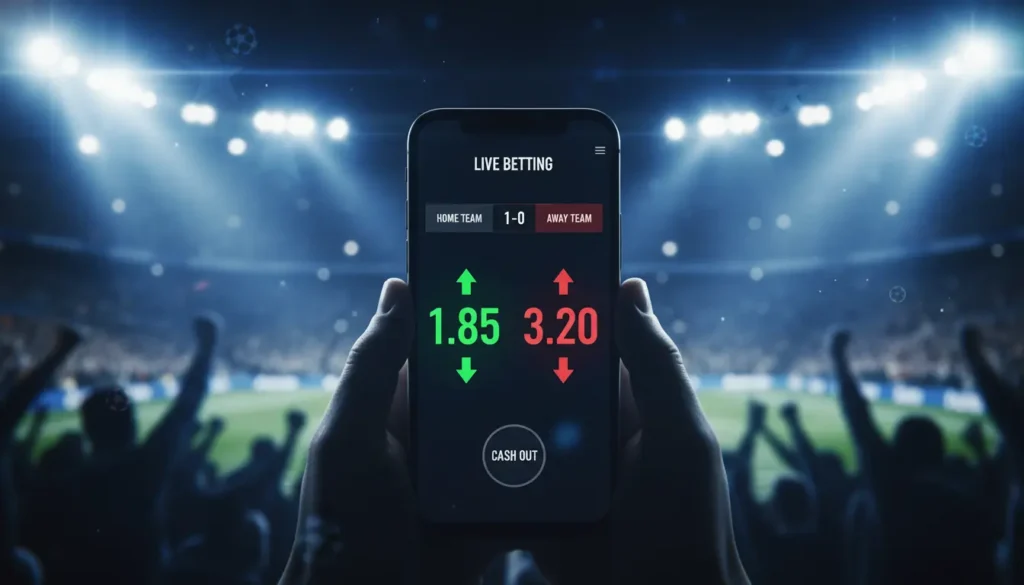
Picture this: It’s the 73rd minute of a Champions League knockout tie. Barcelona is pushing hard against Bayern Munich, who’s sitting on a 1-0 lead. The odds on Barcelona have drifted from 2.50 pre-match to 5.80 right now. The stadium is electric, Barca just brought on two attacking players, and you can feel something’s about to happen. This, my friend, is where live betting separates the amateurs from the professionals.
I’ve been betting on Champions League matches live for over a decade, and let me tell you something most people won’t admit: pre-match betting is basically gambling with a blindfold on. Once that whistle blows and you can actually see how teams are setting up, how they’re moving, who’s having a good day and who looks like they’d rather be anywhere else – that’s when the real opportunities emerge.
Table of Contents
- Real-Time Odds Movements: The Hidden Language
- Key Moments for Live Betting Value
- In-Play Statistics That Actually Matter
- Reading Momentum Shifts
- Weather and Pitch Conditions Impact
- The Manager Factor
- Late Game Dynamics
- Building Successful Live Betting Systems
- Expert Tipster Track Record Analysis
- The Psychology of Live Betting
- Advanced Live Betting Techniques
- Key takeaways for live betting discipline and timing
Real-Time Odds Movements: The Hidden Language
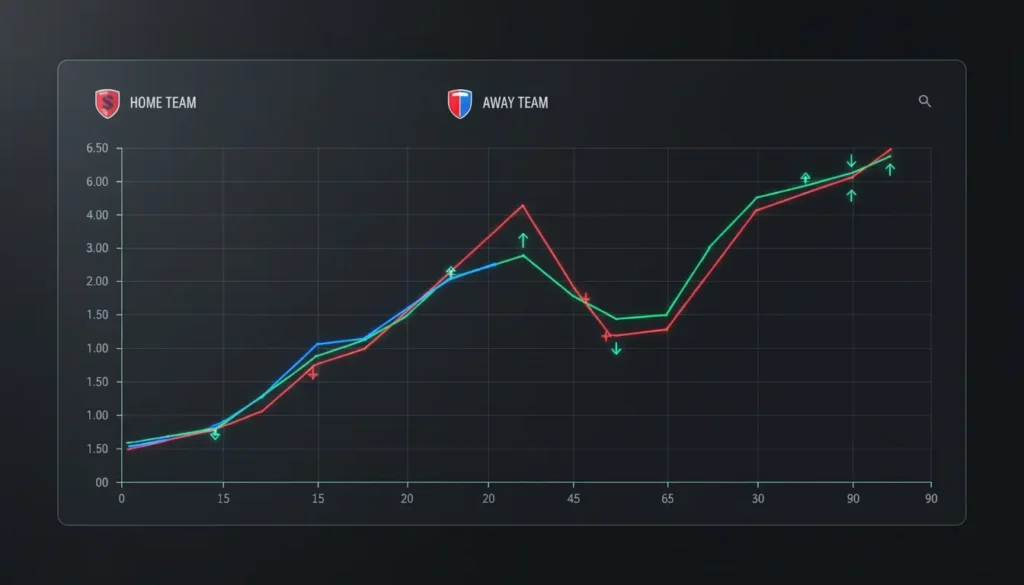
Live odds aren’t just numbers jumping around on your screen. They’re telling a story, and most people can’t read it. When odds move, there’s always a reason. Sometimes it’s obvious – a goal, a red card, a penalty. But the interesting movements are the subtle ones that happen between the major events.
Watch what happens when a team makes a substitution. The automated trading models that bookmakers use have pre-programmed responses. Attacking player coming on? Odds shorten slightly on that team scoring. Defensive substitution? They drift. But here’s the thing these models miss: context. A defensive midfielder coming on might actually signal a shift to a more aggressive pressing system. The odds drift, thinking the team is shutting up shop, but actually they’re about to dominate the middle third and create chances.
I remember a specific match last season – Atletico Madrid versus Liverpool at the Wanda. Simeone brought on a third center-back in the 65th minute. Liverpool’s odds to win shortened from 3.20 to 2.80 because the market read it as Atletico going ultra-defensive. What actually happened? Atletico pushed their wing-backs higher, used the extra center-back to cover, and scored twice on the counter. Those who understood Simeone’s tactics made a killing.
The speed of odds movement tells you something too. Gradual drifts usually mean the trading models are adjusting to possession stats and shot counts. Sharp, sudden movements? That’s either breaking team news or smart money hitting the market hard. Learn to distinguish between the two, and you’ve got yourself an edge.
Key Moments for Live Betting Value
The Opening 10 Minutes
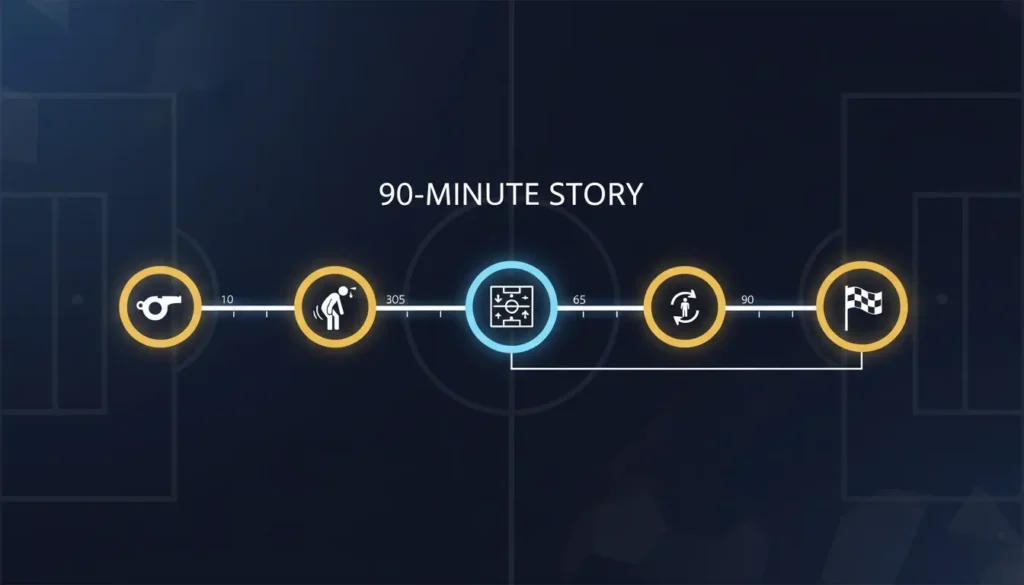
This is gold dust territory. Pre-match odds are based on expectations, but those first ten minutes show you reality. Is the favorite actually dominating, or are they struggling to break down a organized defense? Are the underdogs parking the bus or actually having a go?
Here’s what I’m watching for:
- Which team is winning the midfield battle (not possession, actual control)
- Whether the favorite looks sharp or sluggish
- If the underdog’s game plan is working or falling apart
- Early yellow cards that change the tactical dynamic
The market is slowest to react in these opening minutes because the sample size is small. But patterns emerge quickly in football. A team that can’t string three passes together in the first ten minutes rarely suddenly becomes Barcelona in the eleventh.
The 30-35 Minute Window
This is when legs start to feel heavy from the initial intensity, and gaps appear. It’s also when managers start making mental notes about tactical adjustments for halftime. Watch for teams dropping their line slightly, fullbacks not getting forward as much, or pressing becoming less coordinated.
The odds often don’t reflect this tiredness factor. They see 0-0 after 30 minutes and keep the favorite’s odds relatively short. But if that favorite has been running hard without creating clear chances, they’re prime for a sucker punch on the counter.
Just After Halftime
The first five minutes of the second half are crucial. You can literally see which manager has made the right adjustments. Did they identify the problem? Have they fixed it? Or are they doubling down on something that isn’t working?
More importantly, the automated models take time to adjust to second-half patterns. They’re still using first-half data heavily in their calculations. If you can spot a tactical shift before the model does, you’re printing money.
The 65-70 Minute Period
Substitution time. But not just any substitutions – these are the chess moves that decide matches. The market has predictable responses to certain substitution patterns, but they’re often wrong.
When a team brings on a striker for a midfielder when drawing, odds on them winning shorten. Logical, right? Except half the time, this disrupts their rhythm and actually makes them less likely to score. The team shape becomes lopsided, the new striker needs time to get into the game, and suddenly there’s a gap in midfield the opposition can exploit.
The 85th Minute Onwards
Chaos time. Honestly, if you’re not watching the match and just betting based on odds movements, stay away from this period. But if you’re watching? This is where understanding game state becomes crucial.
A team chasing a goal in a two-legged tie needs to be careful about away goals (oh wait, they scrapped that rule, and the market still hasn’t fully adjusted – there’s your edge right there). In the group stage, goal difference matters. Some teams need to win by two to progress. These nuances create massive value opportunities.
In-Play Statistics That Actually Matter
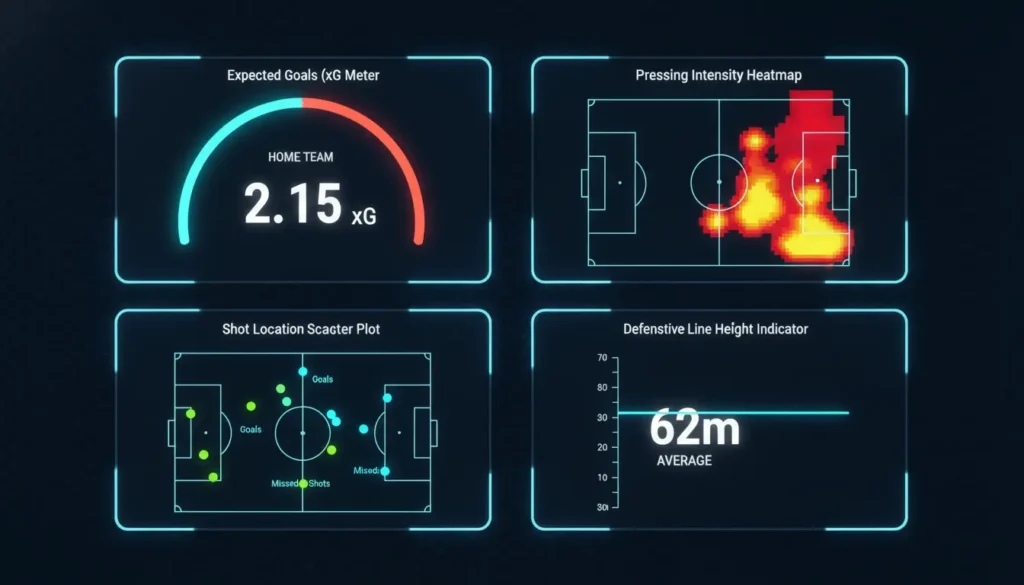
Forget possession percentage. I’ve seen teams with 70% possession lose 3-0. Here’s what actually matters for live betting:
Expected Threat (xT) Buildup
This measures how likely a team is to score from their current positions and passing patterns. Unlike basic possession, it tells you if a team is actually creating danger. When xT is climbing but the scoreline hasn’t changed, goals are coming.
Pressing Intensity Decline
Teams can’t press at maximum intensity for 90 minutes. It’s physically impossible. When you see a high-pressing team’s PPDA (passes per defensive action) increasing, they’re tiring. The spaces are about to open up. The market rarely prices this in quickly enough.
Shot Location Patterns
Not all shots are created equal. A team with five shots from outside the box is less likely to score than a team with two shots from inside the six-yard box. Watch where shots are coming from, not how many there are.
Defensive Line Height Changes
When a team drops their defensive line five yards deeper than they started, it tells you something about their fatigue, their confidence, or their tactical adjustment. The market sees “same scoreline” and keeps odds static. You see a team inviting pressure and know the game dynamic is shifting.
Most betting platforms now offer these advanced stats live during matches. Use them. The casual bettor ignores them or doesn’t understand them. That’s your edge.
Reading Momentum Shifts
Momentum in football is real, but it’s not what most people think it is. It’s not about who’s shouting louder or who looks more confident. Momentum is about which team is creating the better opportunities, controlling territory, and forcing the opposition into errors.
There’s usually a 5-10 minute lag between when momentum shifts and when the odds properly reflect it. This is your golden window. The automated systems need several data points to confirm a trend. Your eyes and brain can spot it from two or three attacking sequences.
Watch for these momentum shift indicators:
- Sudden increase in turnovers in dangerous areas
- Opposition goalkeeper getting significantly busier
- Team winning more second balls and 50-50 challenges
- Crowd noise level changing (if you’re watching with sound)
- Body language shifts – players suddenly looking more urgent or more frustrated
The tricky part is distinguishing between genuine momentum shifts and brief purple patches. A team having one good attack doesn’t mean momentum has swung. But a team having three good attacks in five minutes while their opponent can’t get out of their half? That’s a real shift, and the odds probably haven’t caught up yet.
Weather and Pitch Conditions Impact
This gets overlooked massively in live betting. Rain comes down in the 60th minute? The entire game changes. The team that was playing intricate passing football suddenly can’t. The team that was struggling might actually benefit from a more chaotic, direct game.
But here’s what the automated odds models do: nothing. They keep churning along with their pre-programmed responses to possession and shots. They don’t know it’s raining. You do. Use it.
Heavy rain particularly affects:
- Technical teams more than physical teams
- Attacking play more than defensive play
- Shot accuracy (reduces significantly)
- Goalkeeper handling (more errors possible)
Wind is even more interesting. A strong wind at a team’s back for the second half is worth about 0.3 expected goals. The market barely prices this in. Watch the first half, see which team is shooting into the wind, and back them appropriately when sides switch.
The Manager Factor
Different managers react differently to game states. Knowing this creates edges. Guardiola when losing becomes more predictable – he’ll push fullbacks higher, add attackers, take risks. Mourinho when ahead becomes ultra-conservative – extra defenders, time-wasting, low block.
But the market doesn’t distinguish between managers well enough. It sees “Team losing, odds lengthen.” It doesn’t see “Klopp’s team losing means heavy metal football for the final 20 minutes with serious goal probability.”
Study manager patterns. When do they make subs? What formations do they switch to when chasing games? How do they react to going ahead early? This knowledge is bankable information that the automated systems can’t fully capture.
Late Game Dynamics
The last fifteen minutes of Champions League matches are where fortunes are made and lost. The market becomes more volatile, sure, but it also becomes more predictable if you understand the context.
Things that matter in late games that odds don’t fully reflect:
- Bench strength (fresh legs versus tired defenders)
- Altitude and weather impact on fatigue
- Which team actually needs the goal more (sounds obvious, but odds often don’t reflect desperation properly)
- The referee’s tendency to add generous injury time in big matches
There’s also the “next goal psychology” in late games. If it’s 1-1 in the 85th minute, the team that scores next probably wins. But the market often prices this as if both teams have equal chance of scoring next. They don’t. The team with momentum, the team making positive substitutions, the team whose fans are louder – these soft factors matter enormously late in games.
Building Successful Live Betting Systems

After years of doing this, I’ve developed systems that work. Not always, nothing always works in betting, but consistently enough to be profitable long-term.
The Momentum Reversal System
When a strong favorite dominates for 20+ minutes without scoring, their odds shorten (more people back them thinking a goal is inevitable). But statistically, their chance of winning actually decreases. They’re using energy without reward, frustration builds, and the underdog grows in confidence.
I wait for the favorite’s odds to hit their shortest point (usually around 25-30 minutes if still 0-0), then lay them or back the draw. The beauty is you’re getting better odds than pre-match despite having 20+ minutes of evidence that the favorite is struggling to break through.
The Substitution Anticipation Play
Managers are predictable. Guardiola always makes his first substitution around 65 minutes. Klopp goes earlier, around 60 if chasing. Simeone waits until 70+ unless forced.
Two minutes before these typical substitution times, odds often drift on the team about to make changes (market expects disruption). But if you know the manager’s patterns and likely substitutions, you can bet just before they make changes that actually improve the team. The odds snap back quickly once the market realizes it’s a positive substitution.
The Fatigue Fade
Teams that travel long distances for Champions League away games hit a wall around the 70th minute. It’s biochemistry, not mentality. Their intensity drops by roughly 15-20%.
When Qarabag travels to London, or when English teams go to Eastern Europe, watch for this fade. The home team’s odds to score often don’t shorten enough to reflect this physiological reality. Back the home team to score after 70 minutes in these scenarios.
Expert Tipster Track Record Analysis
Here’s a dirty secret about live betting “experts” – most of them are selling hindsight. They’ll show you their winning bets but conveniently forget the disasters. Real track records in live betting are almost impossible to verify because the odds are so volatile.
But here’s how to spot genuine expertise versus lucky guessing:
- Process over results: Good live bettors can explain why they made a bet with reasoning that made sense at the time, regardless of outcome
- Timing precision: They can tell you exactly when they entered and why that moment was crucial
- Market understanding: They know why odds moved, not just that they moved
- Bankroll management: They never chase, never panic, never deviate from their staking plan
The best live bettors I know aren’t on Twitter showing off winning slips. They’re quietly grinding out 3-5% ROI over thousands of bets. It’s not sexy, but it’s profitable.
The Psychology of Live Betting

This is what nobody talks about, but it’s everything. Live betting is psychological warfare – with yourself. Every goal, every chance, every tackle triggers an emotional response. Your brain screams “DO SOMETHING!” The key to success is knowing when to do nothing.
When your team concedes, your instinct is to immediately back them at the now-longer odds. “They’ll come back!” your heart says. But step back. Why did they concede? Was it a fluke or were they being dominated? Are the longer odds actually value or just reflecting reality?
The worst live bets come from emotional reactions. The best come from cold, calculated observation. When everyone else is panicking, you’re calculating. When everyone else is celebrating, you’re looking for the next edge.
Advanced Live Betting Techniques
Cross-Market Correlation
When one market moves, others should follow. But they don’t always do so immediately. Team A scores? Their odds to win shorten, obviously. But what about Over 2.5 goals? What about Both Teams to Score? These correlated markets sometimes lag by 10-15 seconds. That’s your window.
The Dead Rubber Exploit
In the final group games where one team is already qualified and the other needs a result, the market struggles to price motivation correctly. The qualified team’s odds drift continuously, but often they’re still professional enough to win. Or their B-team is still better than the desperate team’s A-team.
Referee Pattern Recognition
Some referees let games flow, others blow for everything. This massively impacts goal probability but isn’t factored into live odds sufficiently. A strict referee in a heated match means more cards, more breaks in play, less rhythm, fewer goals. The Total Goals market often doesn’t adjust enough for referee impact.
Key takeaways for live betting discipline and timing
Live betting the Champions League isn’t about predicting the future. It’s about recognizing patterns, understanding value, and most importantly, having the discipline to act only when the edge is clear.
The market is smart, but it’s not perfect. It can’t see what your eyes see. It doesn’t understand context like your brain does. It reacts to events, while you can anticipate them.
Every Champions League match offers dozens of betting opportunities. Your job isn’t to bet them all. It’s to identify the three or four where your edge is biggest and execute ruthlessly.
Remember: the house edge in live betting is higher than pre-match. The convenience and excitement cost you in terms of margin. You need to be not just good, but excellent to overcome this. But when you are excellent, when you do develop that edge, live betting becomes the most profitable form of sports wagering available.
The Champions League, with its drama, its quality, its unpredictability, is the perfect laboratory for live betting. Every match is a masterclass if you’re paying attention. Every goal, every substitution, every tactical adjustment teaches you something.
Watch, learn, wait, and when the moment comes – strike. That’s live betting in the Champions League. It’s not for everyone, but for those who master it, it’s the most rewarding form of sports betting there is.
After exploring this guide to Champions League live betting and understanding how timing, momentum, and in-game context can create opportunities, readers can return to championsleagueoddsbet to continue building a broader strategy across different UCL markets.
If someone wants to deepen that live betting perspective with a more focused article on real-time decision-making during European matches, it makes perfect sense to continue with UCL live betting.