Champions League Corner Betting Odds Markets
 Available in US
Corner kicks occupy a peculiar space in football betting consciousness. Most bettors focus obsessively on goals – who scores, how many, when – while corners remain an afterthought despite occurring far more frequently. A typical Champions League match produces between eight and twelve corners; many produce zero goals from open play. This disparity between corner frequency and bettor attention creates opportunities for those willing to specialize in a market that bookmakers price with less precision than headline outcomes.
The corner betting market rewards specialization because it requires different analytical frameworks than goal-based markets. Teams that dominate possession do not necessarily win corners. Defensive teams conceding territory often force corners through blocks and clearances. The relationship between attacking quality and corner generation is weaker than intuition suggests, creating inefficiencies for bettors who understand the underlying dynamics.
Champions League football amplifies corner betting opportunities through tactical diversity. When English pressing teams meet Italian defensive specialists, when possession-dominant Spanish sides face counterattacking German clubs, these stylistic collisions produce predictable corner patterns that casual bettors overlook. The tournament’s elite quality also means set pieces are executed with precision – corners lead to genuine chances more often than in lower leagues, making corner markets simultaneously actionable and meaningful.
Table of Contents
Understanding Corner Generation
Corners arise from two distinct scenarios: attacking pressure and defensive resilience. A team winning corners through attacking pressure typically dominates possession near the opponent’s goal, forcing deflections and saves that redirect the ball behind the goal line. A team winning corners against them – the opponent’s corners – often sits deep and blocks shots, with defensive clearances creating corner opportunities for the attacking side.
This duality means corner totals correlate imperfectly with match control. Barcelona dominating possession at 70% might win fewer corners than a match where they face aggressive pressing, because their controlled possession produces fewer shots requiring saves. Meanwhile, Atletico Madrid defending a lead might concede numerous corners while successfully preventing goals. The corner market thus measures match texture rather than quality – useful information that goal markets do not capture.
Team styles create corner profiles that persist across matches. Attacking teams with wide players who deliver crosses naturally generate corners when those crosses are blocked. Teams that shoot frequently from distance force saves that produce corners. Teams with aerial threats on set pieces might deliberately target corner opportunities, recognizing their advantage in those situations. These stylistic tendencies are more stable than goal-scoring rates, making corner statistics more predictive than many bettors realize.
Opponent characteristics matter equally. Teams that defend by blocking crossing lanes concede more corners than those that defend by winning aerial duels in the box. Goalkeepers who punch rather than catch produce more corners. Defensive lines that sit deep and absorb pressure concede corners through sheer volume of defensive actions. Analyzing both teams’ corner tendencies – generating and conceding – provides a complete picture that single-team statistics miss.
Champions League Corner Statistics
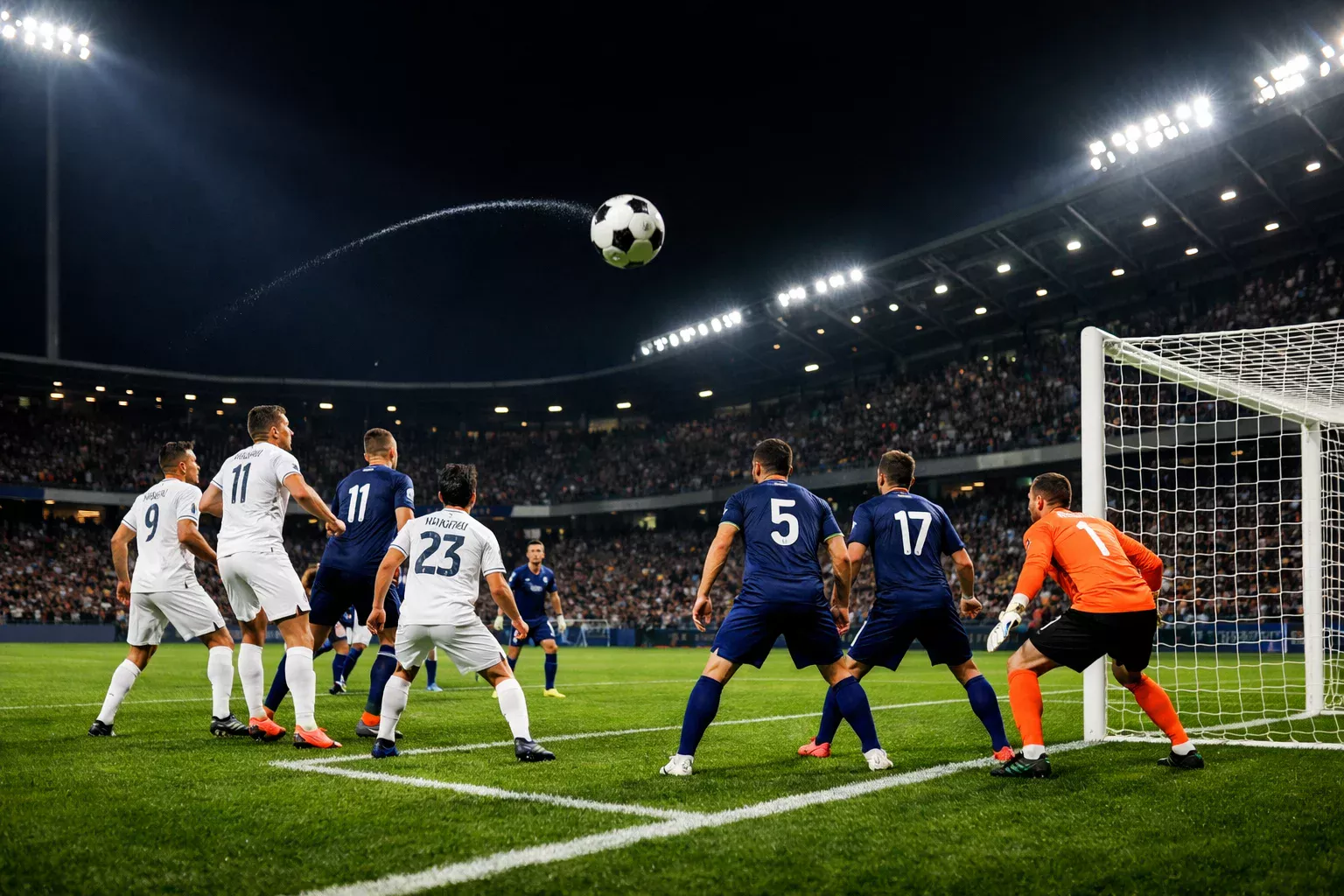
Liverpool have historically been among the Champions League’s highest corner-generating teams, combining wide attacking play with set-piece focus. In recent seasons, Liverpool averaged nearly eight corners per Champions League match, substantially above competition averages. Their pressing style forces turnovers in advanced positions, and their full-backs deliver quality crosses that defenders block into corner situations.
At the other extreme, some elite clubs generate surprisingly few corners despite their quality. Teams that work the ball into central areas for combination play or individual brilliance create fewer corner opportunities than wing-focused sides. Real Madrid under certain tactical setups, despite their attacking quality, sometimes generated below-average corners because their creators preferred dribbling into the box rather than crossing.
The competition average typically falls between nine and eleven total corners per match, though this varies by tournament phase. League phase matches between mismatched opponents often produce higher totals because dominant teams attack persistently against defensive setups. Knockout matches between elite clubs sometimes produce lower totals because tactical respect and fear of elimination suppress the attacking abandon that generates corners.
First-half versus second-half corner distribution offers additional betting angles. Matches that remain goalless at halftime typically see increased corners in the second half as urgency grows. Matches where one team leads comfortably might see fewer second-half corners as the leading side protects their advantage. Understanding these game-state dynamics helps with half-specific corner markets.
Popular Corner Betting Markets
The over/under total corners market works similarly to goals totals. Bookmakers set a line – perhaps 9.5 corners – and you bet whether the actual total exceeds or falls below. The juice on either side indicates which direction the bookmaker expects the market to lean. Corner totals markets typically carry wider margins than goals totals because bookmaker expertise is lower and recreational betting volume is smaller.
Team corner markets isolate one team’s corner performance. You might bet Liverpool to win over 5.5 corners or their opponent to win under 3.5 corners. These markets reward team-specific analysis more directly than totals because they eliminate the opposing team’s corner generation from your bet. When you have strong conviction about one team’s corner tendencies, team markets express that view more precisely.
Corner handicap markets apply Asian handicap logic to corners rather than goals. If Liverpool is favored at -2.5 corners against a weaker opponent, they must win the corner count by at least three for your bet to succeed. These markets are less liquid than goals handicaps but offer value when corner-dominant teams face corner-passive opponents.
First corner and last corner markets attract bettors seeking higher-odds propositions. The team that kicks off typically does not win the first corner (they start with the ball far from their opponent’s goal), creating a slight statistical edge for the receiving team in many matches. Last corner depends on late-match game states – trailing teams pressing for equalizers often win final corners.
Race to corners markets (first to 3, first to 5) reward understanding of early match dynamics. Teams that press aggressively from kickoff generate corners quickly; teams that start cautiously may take longer to generate corner opportunities. These markets can offer value when opening approaches are predictable.
Analytical Approaches
Building a corner betting edge requires systematic data collection that most casual bettors ignore. Track corners generated, corners conceded, home/away splits, first-half/second-half distributions, and corners relative to expected metrics across multiple matches. This historical database reveals patterns that single-match observations miss.
Expected corners (xCorners) models attempt to predict corner generation from underlying match statistics – shots blocked, crosses attempted, touches in the final third. These models help identify whether a team’s corner record reflects sustainable patterns or random variation. A team generating more corners than their xCorners model predicts might regress toward lower totals; a team underperforming their xCorners might see increased corners as variance corrects.
Head-to-head analysis matters because specific matchups produce predictable corner dynamics. When a wing-focused team plays a side that defends in narrow blocks, corners should exceed average. When two possession-oriented teams meet, neither might generate many corners because neither produces the shots and crosses that create corner opportunities.
Weather and pitch conditions influence corner generation in ways that mainstream betting analysis ignores. Wet pitches produce more deflections and unpredictable bounces that lead to corners. Wind affects cross delivery, potentially increasing corner opportunities as crosses drift out of play or require goalkeeper interventions.
Strategic Implementation
The lower profile of corner betting creates both opportunities and challenges. Bookmaker margins are often higher because less sharp money keeps prices efficient. Limits are typically lower because bookmakers have less confidence in their corner pricing. These factors favor small-stakes recreational betting more than professional volume.

Line shopping proves especially valuable for corner markets because bookmaker disagreement exceeds that in goals markets. One operator might offer over 9.5 corners at 1.85 while another offers 1.95 on the same line. This variation exists because corner pricing relies more on algorithms and less on sharp bettor feedback, allowing inefficiencies to persist.
Live corner betting offers opportunities that pre-match markets cannot capture. Once you observe the match’s tactical shape, corner patterns become more predictable. A dominant team pinning opponents back will generate corners consistently; a match featuring cautious probing from both sides will produce fewer. The first ten minutes often reveal whether pre-match corner expectations were accurate.
Combining corner betting with other markets creates interesting possibilities. If you believe a match will be high-scoring and open, both goals over and corners over become attractive. If you expect a tight defensive struggle, under goals and under corners align logically. These correlated views can be expressed through separate bets or same-game multiples where available.
Managing Corner Betting Bankroll
Corner betting should occupy a defined portion of your overall Champions League betting allocation rather than dominating it. The markets are less liquid, bookmaker expertise is lower (creating both opportunity and mispricing risk), and variance can be substantial because corner totals fluctuate more than you might expect within any team’s performance range.
Flat staking works well for corner betting because confidence calibration is difficult. Unlike goals markets where you might genuinely believe one match offers stronger edge than another, corner analysis rarely produces such clear differentiation. Betting the same amount on each corner selection simplifies bankroll management while accumulating meaningful sample sizes.
Track corner betting results separately from other markets. This separation reveals whether your corner analysis actually generates profit or merely provides entertainment variety. Many bettors discover their corner betting underperforms their goals betting despite feeling more confident about corner predictions – a valuable insight that informs future allocation.
The relatively wide margins on corner markets mean that breakeven requires higher edge than goals betting. If goals markets offer 3% effective margin and corner markets offer 6%, you need twice the analytical edge to achieve the same expected profit. This mathematical reality should temper expectations even when your corner analysis feels strong.
Champions League-Specific Factors
The tournament’s knockout structure affects corner patterns through psychological dynamics. First legs often feature cautious approaches that suppress both goals and corners. Second legs where teams trail on aggregate produce attacking desperation that generates corner opportunities. Understanding aggregate situations helps predict second-leg corner dynamics.
Rest and rotation influence corner generation because pressing intensity determines corner frequency. A team playing their third match in seven days with a rotated squad might generate fewer corners than fully rested opponents attacking with their strongest lineup. Champions League scheduling congestion creates predictable physical disadvantages that manifest in corner statistics.
Venue effects matter because stadium dimensions and pitch conditions affect corner generation. Smaller pitches compress play, potentially reducing corners by limiting wide crossing opportunities. Larger pitches allow width that creates more corner-generating situations. While this factor is difficult to quantify precisely, it contributes to home/away corner differentials.
Elite competition quality means corners translate into genuine danger more often than in domestic leagues. When Liverpool win a corner against Bayern Munich, world-class delivery meets world-class attack. This quality correlation makes Champions League corner statistics more meaningful for broader match analysis, though it does not directly affect corner totals betting.
After exploring Champions League corner betting and seeing how match flow, tactical pressure, and game state influence this market, readers can return to championsleagueoddsbet to continue with alternative UCL markets that are often overlooked.
If someone wants to complement this market with another lower-profile but highly situational angle, the strongest next article is discipline markets.