Tactical Analysis for Champions League Betting
 Available in US
Football tactics determine how matches unfold – whether games produce goals, which team controls territory, where dangerous moments emerge, and how intensity ebbs and flows across ninety minutes. Tactical analysis for betting purposes moves beyond identifying which team plays better to understanding how specific tactical approaches interact and what outcomes those interactions predict. A high-pressing team facing a possession-dominant opponent creates different match dynamics than two counter-attacking sides meeting; these dynamics affect not just match results but goals, corners, cards, and every betting market built on match events.
Champions League football showcases diverse tactical philosophies as clubs from different footballing cultures converge. German pressing intensity meets Spanish positional play; English directness confronts Italian defensive organization; Portuguese technical fluency faces Dutch attacking principles. These tactical clashes create analytical opportunities because bookmakers cannot perfectly price every tactical interaction. Understanding how specific styles combine enables predictions that generic statistical analysis cannot produce.
The practical challenge lies in translating tactical observation into betting-relevant predictions. Recognizing that a team presses high provides interesting information; predicting that high pressing against a team prone to turnovers will produce goals provides actionable betting insight. Tactical analysis must connect stylistic understanding to specific market expectations.
Table of Contents
Formations and Their Implications
Formations provide the structural foundation for tactical analysis, though modern football’s positional fluidity means nominal formations rarely reflect actual pitch positioning. A team listed as 4-3-3 might defend in 4-5-1, attack in 3-2-5, and transition between these shapes constantly. Understanding how formations transform during different match phases reveals more than static formation labels.
Attacking formations with multiple forwards – 4-3-3, 3-4-3, 4-2-4 – typically generate more shots and expected goals than defensive setups. These formations commit bodies forward, creating numerical advantages in attacking positions but leaving defensive vulnerabilities during transitions. Matches featuring two attacking formations often produce open, high-scoring affairs; backing over goals lines becomes attractive when formations suggest mutual attacking intent.
Defensive formations – 5-3-2, 5-4-1, 4-5-1 – prioritize compactness and organization over attacking numbers. Teams employing these structures typically concede fewer goals while struggling to create volume in attack. When defensive formations face attacking setups, asymmetric matches often result: one team dominates possession and territory while the other defends deeply and seeks counter-attacks.
Formation matchups create specific dynamics. Wide formations (4-3-3, 3-4-3) that attack through flanks generate corner kicks as crosses deflect out of play or require last-ditch clearances. Narrow formations that attack through central areas produce fewer corners but more direct goal attempts. Understanding formation width helps predict corner market outcomes.
Playing Styles and Match Dynamics
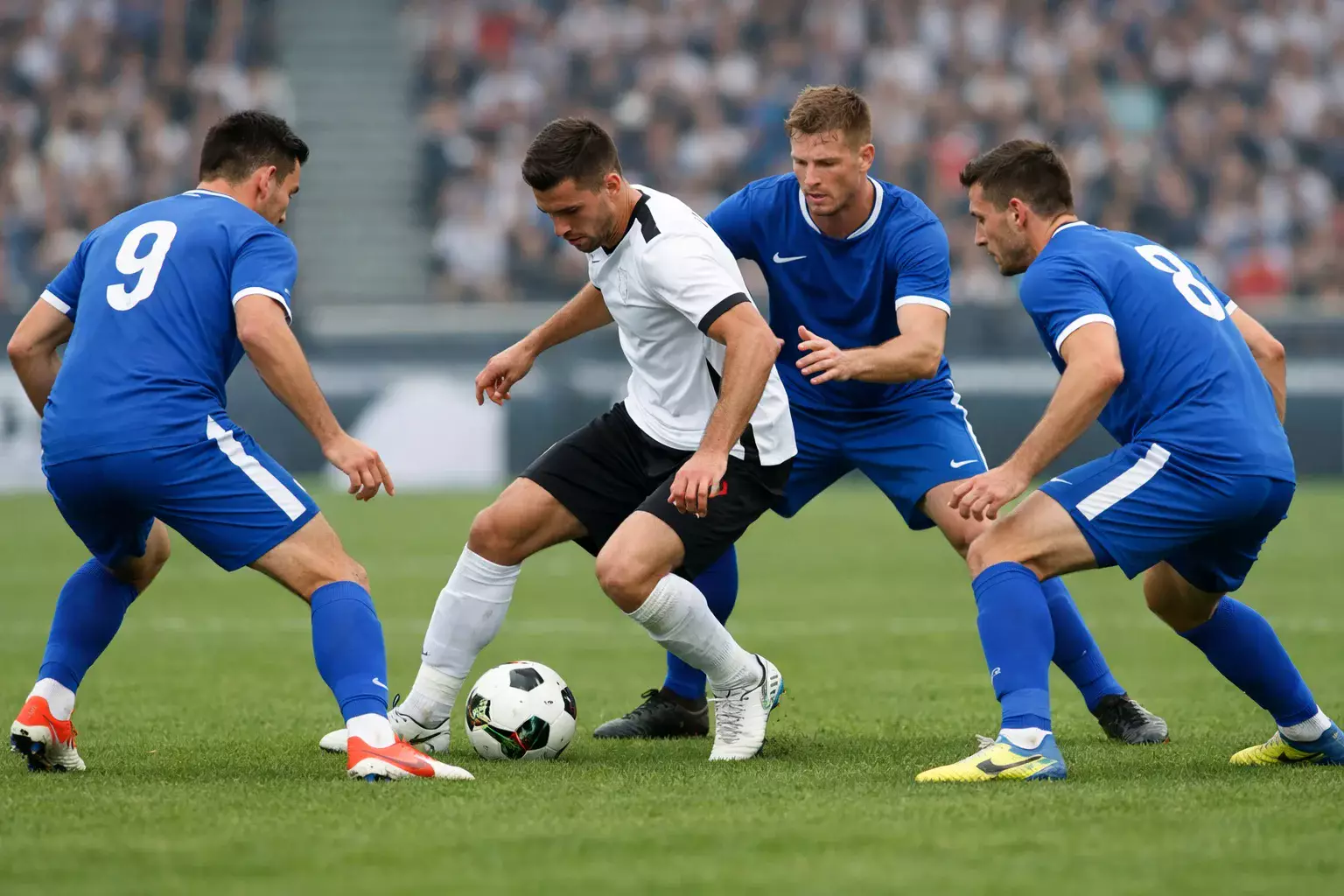
Possession-based teams prioritize ball retention, patient build-up, and positional superiority. They typically dominate territory and shot volume while sometimes struggling against organized defenses that deny space. Barcelona, Manchester City, and clubs influenced by positional play philosophy exemplify this approach. Against passive opponents, possession teams can score freely; against aggressive pressing sides, they face challenges building from the back.
Counter-attacking teams concede territory deliberately, defending compactly before exploiting space behind advancing opponents. These teams often generate high-quality chances from fewer total attempts because counter-attacks create advantageous situations against unbalanced defenses. Matches between possession and counter-attacking teams often see lopsided possession statistics but balanced expected goals.
High-pressing teams attempt to win the ball in advanced positions, forcing errors and creating chances from turnovers. Liverpool under Klopp and various German clubs exemplify gegenpressing approaches that generate chaotic, high-intensity matches. High pressing produces turnovers but also requires high defensive lines that counter-attacks can exploit. Matches involving pressing teams often see goals from both sides – making BTTS (both teams to score) markets attractive.
Direct teams bypass midfield buildup, using long balls to target forwards and compete for second balls. This approach reduces possession but creates aerial duels and territory through forward play. Direct teams generate corner kicks from headed clearances and sustained pressure; they suit corner over markets and physical battle predictions.
Tactical Matchup Analysis
The most valuable tactical analysis examines how specific styles interact rather than evaluating teams in isolation. A possession team facing another possession team creates a different match than the same team facing a counter-attacking side. Predicting match dynamics requires understanding the specific combination of approaches.
When two possession-based teams meet, matches often feature extended periods of controlled play with limited chances. Both teams prioritize ball retention; neither concedes space willingly. These matches frequently produce under goals outcomes as neither side generates the transitional chaos that creates clear chances.
When possession teams face counter-attacking sides, asymmetric matches emerge. The possession team dominates statistics while the counter-attacking side waits for opportunities. These matches often produce moderate goal totals – the possession team eventually creates chances through sustained pressure while the counter-attacking team converts from limited opportunities. Both teams scoring becomes likely as each approach produces some goals.
When two pressing teams meet, chaotic, end-to-end matches frequently result. Both teams attack aggressively, both leave space behind, and both create turnovers in dangerous areas. These fixtures suit over goals markets as defensive organization breaks down repeatedly. Cards markets also become attractive as physical battles and tactical fouls accumulate.
When two defensive teams meet, attritional, low-scoring affairs often result. Neither team commits forward numbers; both prioritize not losing over winning. These matches suit under goals markets and draw predictions. The caution produces tight scorelines regardless of quality differential.
Champions League Tactical Considerations
European competition creates specific tactical dynamics that domestic leagues do not replicate. Away teams in Champions League matches historically played more cautiously than domestically, prioritizing avoiding defeat over seeking victory. While the abolition of the away goals rule has somewhat reduced this tendency, visiting teams in knockout rounds still often approach first legs conservatively.
The tournament’s quality compression affects tactical analysis. Domestic leagues feature wide quality ranges where top teams can play expansively against weak opposition. Champions League matches more often feature comparable opponents, encouraging tactical caution as managers respect opposition quality. This compression can suppress expected goals relative to domestic averages.
Different footballing cultures bring distinct tactical philosophies to European competition. German teams typically press intensively; Spanish teams prioritize possession; Italian teams organize defensively; English teams combine physicality with vertical attacking. Understanding cultural tendencies helps predict approaches even for unfamiliar opponents.
Managerial experience in European competition influences tactical choices. Managers with extensive Champions League experience understand the tournament’s specific demands; first-time participants sometimes misjudge appropriate approaches. Experienced European managers often adapt domestic tactics for continental competition in ways that affect predictions.
Translating Tactics to Markets
Goals markets respond most directly to tactical analysis. Attacking formations, pressing styles, and open match dynamics predict elevated goal expectations; defensive approaches, possession control, and cautious tactics predict suppressed scoring. Compare your tactical assessment against market lines to identify discrepancies.
Corner markets reflect formation width and playing style. Wide attacking formations generate more corners than narrow approaches; direct teams that pressure defenses create corner opportunities from clearances; possession teams that attack through central areas produce fewer corners despite territorial dominance. Tactical analysis enables corner predictions beyond simple statistical averages.
Card markets connect to tactical intensity. Pressing teams commit more fouls as pressing actions sometimes become illegal challenges. Counter-attacking teams facing possession dominance accumulate tactical fouls to disrupt build-up play. Physical battles between direct teams produce card-worthy challenges. Identify which tactical interactions predict elevated or suppressed card counts.
Match result markets respond to tactical matchups more subtly. Favorable tactical matchups can offset quality disadvantages; unfavorable matchups can undermine superior teams. When a modest team’s tactical approach specifically troubles an elite opponent’s style, value may exist on the underdog despite overall quality differential.
Practical Implementation
Develop tactical profiles for teams you regularly analyze. Document their formations, playing styles, pressing intensity, defensive approaches, and set-piece structures. Update these profiles as teams evolve tactically through seasons. This accumulated knowledge enables rapid pre-match assessment.
Watch matches with tactical awareness rather than passive observation. Notice how teams structure their pressing, where they attempt to progress the ball, how they defend transitions, and what patterns their attacks follow. This observational investment builds intuition that statistical analysis alone cannot provide.
Combine tactical analysis with statistical validation. Your tactical assessment might predict a high-scoring match; check whether statistical models agree. Convergence between tactical and statistical analysis increases confidence; divergence demands explanation of why approaches differ.
Track whether your tactical assessments improve betting outcomes. If incorporating tactical analysis consistently enhances your predictions compared to ignoring tactical factors, continue developing these methods. If results show no improvement, tactical information might already be priced efficiently in your target markets.
Set-Piece Tactical Dimensions

Set-pieces represent structured tactical situations where team preparation directly influences outcomes. Some clubs invest heavily in set-piece coaching, developing elaborate routines for corners, free kicks, and throw-ins. These investments produce measurable advantages that inform betting predictions.
Corners and free kicks suit teams with aerial presence, quality delivery, and practiced routines. Track which clubs convert set-pieces efficiently versus those who struggle despite generating opportunities. When set-piece-strong teams face opponents who concede frequently from dead balls, adjusted scoring expectations become appropriate.
Defensive set-piece vulnerability matters equally. Some teams concede disproportionately from corners and free kicks due to poor organization, weak aerial defending, or inadequate marking discipline. Identifying these vulnerabilities helps predict when specific opponents will exploit weaknesses.
Managerial Tactical Signatures
Managers impose tactical philosophies that create predictable team characteristics. Guardiola teams prioritize possession and positional play; Klopp teams press intensively and attack vertically; Simeone teams defend deep and counter-attack. Understanding managerial philosophies helps predict team approaches even without detailed recent observation.
Managerial experience against specific opponents sometimes reveals tactical edges that persist across multiple meetings. Some managers consistently outmaneuver certain rivals through tactical preparation; others repeatedly struggle against specific approaches. Track managerial head-to-head records as tactical indicators.
New managerial appointments create transitional periods where tactical identity is uncertain. Teams under new management might not yet have established clear playing patterns, making tactical analysis more speculative until sufficient matches reveal emerging approaches.
In-Match Tactical Evolution
Tactical awareness extends to live betting through observation of in-match developments. How teams respond to going ahead or behind, how managers adjust formations through substitutions, and how match intensity evolves all affect probabilities that live markets may not fully capture.
Teams leading often become more conservative, defending their advantage rather than pursuing additional goals. This tactical shift affects goals market expectations; over goals value might decrease as leading teams prioritize protection.
Teams trailing must attack more aggressively, opening space that creates counter-attacking opportunities. This dynamic can produce goals in either direction – the trailing team scores from increased attacking effort, or the leading team scores from exploiting spaces left by aggressive opposition.
Half-time analysis provides natural tactical reassessment opportunity. Managers make adjustments during the interval; observing first-half patterns helps predict second-half developments that inform live betting positions.