Referee Analysis for Champions League Betting: The Official Factor
 Available in US
Referees represent the most predictable variable affecting card and booking markets – more consistent than team styles or match intensity in producing specific disciplinary outcomes. While individual matches introduce tactical and emotional factors that influence foul counts and cards, referee tendencies provide a stable baseline that persists across different fixtures and contexts. Understanding referee patterns enables more accurate predictions in booking markets, penalty likelihood, and even match dynamics that affect goals markets.
Champions League football draws elite referees from across Europe, each bringing distinctive enforcement styles developed through years of domestic officiating. Some officials average three cards per match; others average six. Some favor advantage play and minimal interruption; others prioritize strict enforcement of every infringement. These tendencies are documented, measurable, and directly applicable to betting analysis.
UEFA’s referee assignment process for Champions League matches ensures officials from neutral countries – a Spanish referee will not officiate a match involving Spanish clubs. This neutrality policy aims to eliminate hometown bias but creates situations where referees’ domestic tendencies encounter different footballing cultures. A German referee accustomed to Bundesliga physicality might enforce differently when officiating between two technically-oriented Spanish sides.
Table of Contents
Referee Statistical Profiles
The most fundamental referee metric is average cards per match. Some UEFA-registered officials consistently average 4+ yellow cards per fixture; others rarely exceed 3. This baseline dramatically affects booking points markets, where lines are typically set around 25-30 points (yellow = 10, red = 25). A strict referee can push expected booking points well above typical lines; a lenient official suppresses expectations.
Fouls-per-card ratio reveals how tolerantly referees treat physical play before reaching for cards. An official who issues a card every four fouls enforces strictly; one requiring six fouls per card allows more physicality before sanctioning. Combined with expected foul counts based on team styles, this ratio enables specific card count predictions.
Red card tendencies show meaningful variation. Some referees have issued multiple red cards across recent seasons; others almost never show red regardless of circumstances. While red cards are inherently rare and unpredictable, referee tendencies influence the probability distribution for specific card markets and affect over/under booking points calculations.
Penalty award rates indicate how readily referees whistle spot-kicks for contact in the box. VAR has standardized obvious penalty decisions, but marginal calls still depend on the on-field referee’s initial judgment. Officials with historically high penalty award rates might be more likely to point to the spot for borderline contact.
Applying Referee Data
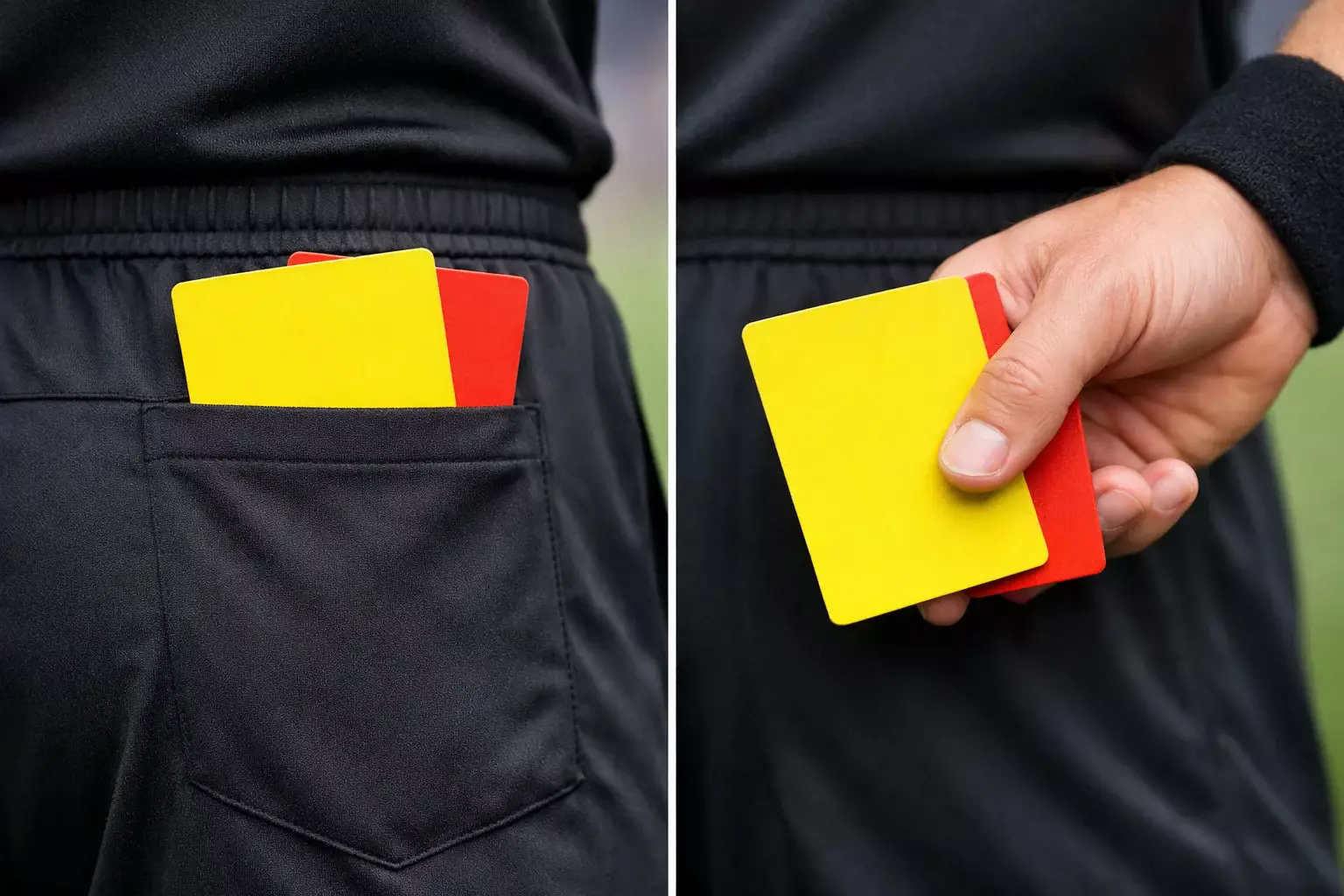
Pre-match analysis should identify the appointed referee and research their statistical profile. Most major football statistics websites track referee data including cards per match, home/away bias, and historical patterns. This information is publicly available but requires systematic retrieval before each fixture.
Booking markets respond most directly to referee tendencies. If the assigned referee averages 5.2 cards per match and the booking points line is set at 28, the line assumes roughly three yellow cards – well below the referee’s average. Over booking points becomes attractive regardless of which teams are playing.
Player card markets benefit from combining referee tendencies with player fouling profiles. An aggressive defensive midfielder facing a strict referee creates elevated booking probability. Conversely, a booking-prone player facing a lenient referee might offer value on “not to be carded” selections if available.
Goals markets interact with refereeing style indirectly. Referees who allow physical play and rarely stop matches for minor fouls create more open, flowing football – potentially favoring goal-scoring. Officials who whistle frequently interrupt attacking momentum and create more set-piece situations. These stylistic tendencies influence match dynamics without directly determining goal outcomes.
Champions League-Specific Considerations
UEFA draws from a pool of elite European referees, each with domestic league experience that shapes their tendencies. Officials who regularly work in physical leagues like the Premier League or Serie A may tolerate more contact than those from leagues emphasizing technical play. When an English referee officiates a match between Spanish clubs, this cultural clash can produce unexpected enforcement patterns.
The tournament’s high stakes influence referee behavior in ways domestic fixtures might not. Officials know millions watch Champions League matches; career implications of controversial decisions are substantial. This awareness can produce either conservatism (avoiding contentious calls) or heightened attention (ensuring visible control of intense fixtures).
VAR integration has standardized certain decisions while creating new dynamics. Clear and obvious errors are overturned regardless of referee tendencies; marginal calls still reflect individual judgment. Referee VAR interaction styles vary – some readily consult monitors while others resist overturning their initial calls. These tendencies affect how often VAR changes outcomes in specific referees’ matches.
Knockout rounds intensify both player and referee behavior. The elimination context produces more tactical fouling, more emotional confrontations, and more pressure on officials. Referees in knockout fixtures often issue more cards than the same officials in league phase matches, reflecting the heightened intensity they must control.
Research Methodology
Build referee tracking systems before relying on this analysis. Identify reliable data sources that track referee statistics for European competitions. Document which referees regularly work Champions League matches and maintain updated statistics for officials on UEFA’s elite roster.
Compare referee tendencies against the specific teams in each fixture. A strict referee officiating between two disciplined, technical teams might produce fewer cards than his baseline suggests. A lenient referee in a fierce derby might still produce elevated cards due to match intensity. Referee baselines must be adjusted for team and fixture context.
Track your referee-based predictions against outcomes to evaluate whether this analysis adds value. If systematically incorporating referee tendencies improves your booking market results, continue refining your research methodology. If predictions show no improvement over ignoring referee factors, the market may already price this information efficiently.
Account for referee evolution over time. Officials’ tendencies can shift as they gain experience, receive UEFA feedback, or respond to tactical evolution in the sport. A referee who was notably strict five years ago might have moderated; one previously lenient might have tightened enforcement. Weight recent seasons more heavily than distant historical data.
Market Efficiency Considerations
Referee information is publicly available before most matches, allowing bookmakers to incorporate official tendencies into their lines. Booking points lines typically reflect referee averages, though adjustment precision varies across operators. The analytical edge comes not from knowing referee tendencies but from assessing whether bookmakers have weighted them appropriately against other factors.
Smaller betting markets – individual player cards, specific card counts, exotic booking propositions – often show less efficient pricing than headline booking points markets. If sophisticated bettors and bookmakers focus on major markets, secondary markets may retain pricing inefficiencies that referee analysis can exploit.
Line shopping becomes particularly valuable for referee-influenced markets. Different bookmakers weight referee tendencies differently against team and fixture factors. A booking points line that accounts for team styles but underweights a strict referee’s tendencies might offer value that other bookmakers have correctly priced.
Live betting during matches can capture referee tendency value that pre-match markets could not. If the assigned referee begins the match enforcing strictly – early cards, frequent whistles – live booking markets might not fully adjust to the emerging pattern. Observing the referee’s actual enforcement enables more confident live booking selections.
Limitations and Caveats

Referee tendencies explain only part of card variance. Team styles, match intensity, tactical fouling, player emotions, and random incidents all influence disciplinary outcomes. A normally lenient referee can produce many cards in a particularly aggressive match; a strict official might preside over disciplined football. Tendencies provide baselines, not guarantees.
Sample sizes for individual referees are smaller than for teams. A referee might officiate twenty matches per season; a team plays forty or more. This smaller sample makes referee statistics less stable than team statistics. Recent tendency shifts might reflect genuine changes or sampling noise.
Psychological and situational factors modify tendencies in unpredictable ways. A referee who normally issues many cards might be conservative in a high-profile final, fearing controversy. One normally lenient might tighten control if early incidents suggest match is escalating. These situational adjustments are difficult to predict systematically.
Card market margins are often higher than goals or match result markets, meaning you must overcome more bookmaker edge to achieve profitability. The analytical effort required for referee analysis must justify returns after accounting for these elevated margins. Evaluate whether your booking market results justify continued focus on this analytical dimension.
Practical Implementation
Develop a systematic approach to referee research that integrates with your broader pre-match analysis. When Champions League fixtures are announced, immediately identify the appointed officials and retrieve their relevant statistics. Create reference documents or spreadsheets that enable quick comparison between referee tendencies and upcoming fixture characteristics.
Focus your analysis on fixtures where referee tendencies create clear expectations. A notably strict referee officiating between two disciplined technical teams creates tension between referee history and fixture context – analyze which factor will dominate. A lenient referee in a high-stakes derby might face intensity that overrides his typical conservatism – assess whether match factors will push beyond baseline tendencies.
Combine referee analysis with team-specific disciplinary profiles. Some clubs consistently generate many cards regardless of officiating; others remain disciplined even against strict referees. When a high-card team meets a strict referee, expectations should exceed what either factor alone would suggest. When a disciplined team faces a lenient official, cards might fall below typical lines.
Monitor referee appointment announcements, which typically occur several days before Champions League matches. This timing creates windows where you might identify value before markets fully adjust. If a booking points line was set before referee announcement, check whether the appointed official’s tendencies warrant adjustment.
Beyond Cards: Referee Impact on Other Markets
Refereeing style influences match flow in ways that affect goals markets. Officials who allow advantage and minimize stoppages create faster, more open matches. Those who whistle frequently interrupt attacking momentum and produce more set-pieces. These stylistic tendencies can influence expected goals and match pace.
Penalty award tendencies affect both goals markets and specific penalty betting options. While VAR has standardized clear penalties, marginal calls still reflect referee interpretation. Officials with historically high penalty rates might influence both team and match over goals expectations when fixtures involve teams that attack through the box.
Added time allocation varies by referee, affecting late goal probabilities. Some officials consistently add substantial stoppage time; others minimize additions. In matches where late goals matter for specific betting positions, referee stoppage time tendencies provide relevant information.
Foul counts themselves can become betting markets. Teams that foul frequently might face elevated foul totals against referees who whistle tightly. Those that avoid fouling might produce lower foul counts than opponents expect. When foul markets are available, referee whistle frequency directly influences expectations.
Building Long-Term Referee Intelligence
Create and maintain a database of referee statistics for officials regularly assigned to Champions League matches. Update after each matchweek with cards issued, penalties awarded, and any notable patterns observed. This accumulated knowledge enables faster, more confident analysis as the season progresses.
Note referee performances that deviate substantially from their baselines. If a normally strict referee produces few cards in a specific fixture, understand why – disciplined teams, low-intensity match, or genuine shift in approach. These contextual observations refine your understanding of when baseline tendencies will manifest.
Track your referee-based betting results separately from other analyses. If booking market predictions consistently outperform when you incorporate referee analysis, this validates your methodology. If results show no improvement, the market may already price referee information efficiently, reducing the value of additional analytical effort.