Champions League Odds Comparison Strategy
 Available in US
If you asked professional bettors to name the single most important habit that separates winners from losers, many would answer: line shopping. The concept is disarmingly simple – compare odds across multiple bookmakers and bet with whoever offers the best price. Yet this elementary practice, ignored by the majority of recreational bettors who maintain loyalty to a single sportsbook, can transform marginal losing records into consistent profitability without changing a single selection.
The mathematics are unforgiving. A bettor who consistently takes -110 odds needs to win 52.38% of bets just to break even. The same bettor consistently finding -105 odds needs only 51.22% to break even. That difference – slightly over one percentage point in required win rate – represents the gap between long-term profit and loss for countless bettors operating near breakeven levels. Across hundreds of Champions League bets over a season, finding better prices on even a fraction of selections compounds into substantial profit differential.
Line shopping becomes even more valuable in Champions League betting because the tournament attracts massive global interest, creating varied opinions among bookmakers about fair odds. European operators weight domestic leagues differently than Asian books. Sharp-focused bookmakers like Pinnacle move lines based on informed money while recreational-oriented sites maintain odds designed to balance public action. These philosophical differences produce odds discrepancies that patient bettors can systematically exploit.
Table of Contents
Why Odds Differ Across Bookmakers
Understanding why bookmakers offer different prices on identical outcomes helps bettors predict where value might emerge. Several structural factors create the odds discrepancies that line shopping exploits.
Market-making bookmakers set initial lines based on sophisticated models and trader judgment, then adjust as money flows in. Pinnacle exemplifies this approach – they publish early odds reflecting their probability assessments, welcome sharp action, and move lines efficiently toward true market prices. Other bookmakers copy these opening lines with varying delays and modifications, creating temporary discrepancies before markets align.
Recreational bookmakers like many mainstream operators shade odds toward public favorites. When Manchester City plays in the Champions League, casual bettors overwhelmingly back City regardless of price. These books may offer City at shorter odds than sharp bookmakers while providing longer odds on opponents – creating value for contrarians willing to fade public sentiment. The phenomenon intensifies during high-profile knockout matches when casual betting volume spikes.
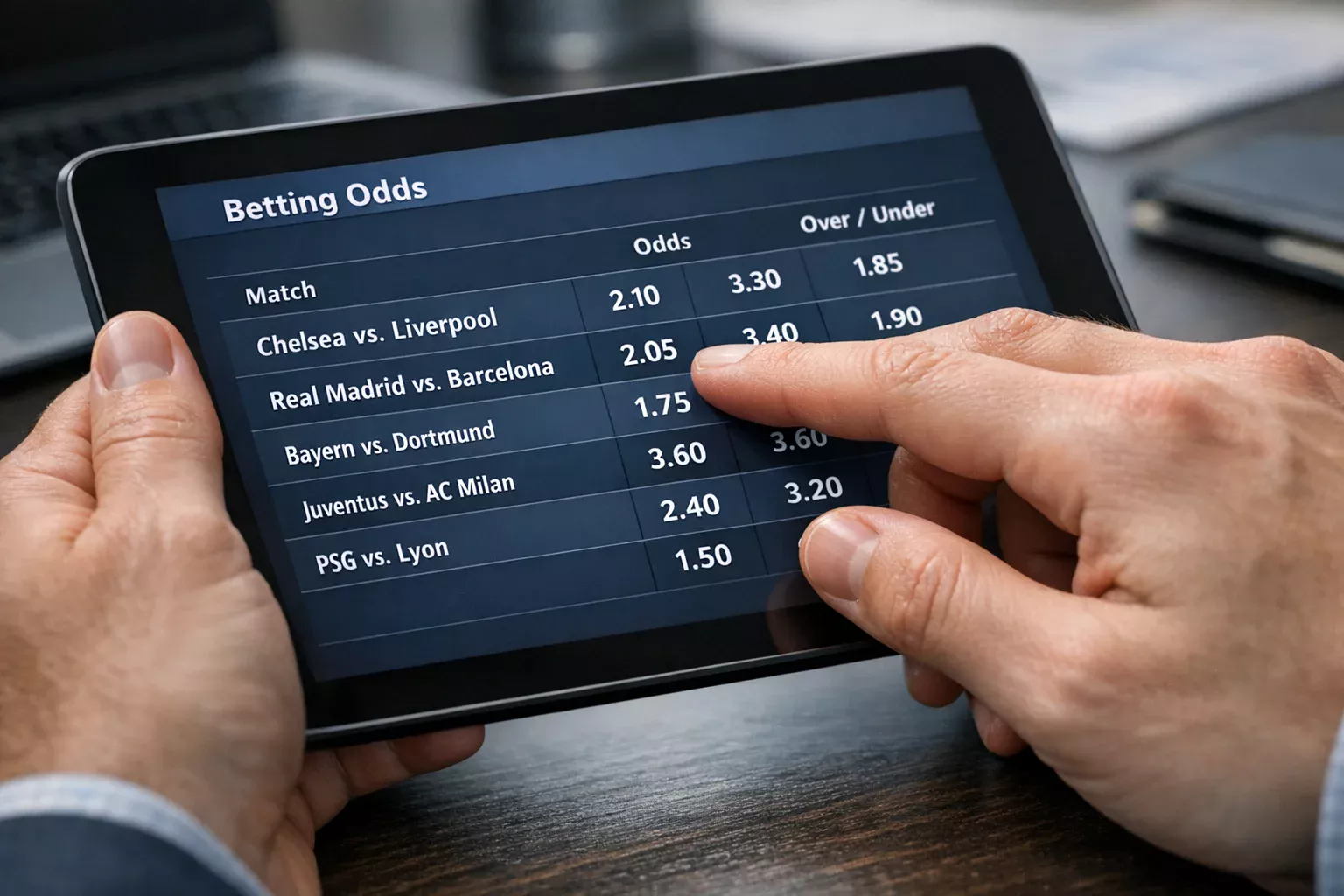
Regional biases influence odds when bookmakers serve specific geographic markets. A Spanish bookmaker might offer shorter odds on Real Madrid than a British operator, reflecting their customer base’s betting patterns. Asian bookmakers often provide superior Asian handicap odds compared to European counterparts who treat these markets as secondary offerings. Recognizing which bookmakers specialize in which markets helps target line shopping efforts efficiently.
Promotional considerations occasionally produce genuinely favorable odds. Bookmakers competing for market share may boost specific selections or reduce margins on marquee Champions League matches to attract customers. While these promotions often carry restrictions, genuine enhanced value sometimes emerges for bettors who monitor multiple operators’ offerings.
The Practical Impact of Better Odds
Consider a concrete Champions League example to illustrate line shopping’s financial impact. You want to back Borussia Dortmund to beat a French opponent in the league phase. Different bookmakers offer varying prices:
- Bookmaker A: 1.75
- Bookmaker B: 1.80
- Bookmaker C: 1.85
- Bookmaker D: 1.90
A £100 bet on Dortmund returns £175, £180, £185, or £190 depending on which bookmaker you choose – a £15 swing between worst and best price. If Dortmund wins ten similar matches over a season where you identified equivalent price variation, you have either £1,750 or £1,900 depending on your line shopping discipline. That £150 difference represents pure profit captured simply by checking prices before betting.
The impact compounds further when expressed as percentage return on successful bets. The 1.75 price yields 75% profit; the 1.90 price yields 90% profit. You receive 20% higher returns on every winning bet just by spending thirty seconds comparing odds. No analytical improvement, no better selections, no additional research – just mechanical price comparison.
For bettors operating near breakeven, these marginal gains determine whether their overall record produces profit or loss. A bettor winning 54% of flat-stake match result bets at average odds of 1.85 generates meaningful profit. The same bettor winning 54% at average odds of 1.75 might barely break even after accounting for occasional price improvements by bookmakers on their losing selections. Line shopping is not about finding an edge; it is about maximizing the edge you already have.
Implementing a Line Shopping System
Effective line shopping requires maintaining funded accounts at multiple bookmakers – typically five to ten for serious bettors, though even three or four provides significant benefit. The setup involves initial effort: completing registration, identity verification, and funding accounts. Once established, the ongoing process becomes routine.
Before placing any Champions League bet, check prices across all your accounts. Many bettors use odds comparison websites like OddsPortal, Oddschecker, or OddsJam to view prices across dozens of bookmakers simultaneously. These tools aggregate real-time odds, highlighting best available prices and allowing rapid comparison without logging into each account individually.
However, odds comparison sites have limitations. They may not cover all bookmakers in your jurisdiction, can lag slightly behind real-time prices, and sometimes miss promotional boosts or enhanced odds available only through direct account access. Supplementing comparison sites with direct checks of your primary bookmakers ensures you capture maximum value.
Time matters in line shopping. Odds move throughout the day as information emerges and money flows. Sharp bookmakers typically move first; recreational books follow with varying delays. If you identify a selection early, checking prices at opening may reveal which books have not yet adjusted to market-setting moves. Conversely, waiting until closer to kickoff allows all books to reach final prices, though late-breaking team news can create sudden discrepancies as some operators adjust faster than others.
Developing systematic habits proves essential. Create a pre-bet checklist: determine your selection, check prices at all accounts, record the best available price, place the bet. This mechanical process prevents the temptation to bet impulsively with whatever bookmaker you happen to have open. Over time, you will develop intuition about which bookmakers typically offer best prices on specific market types, streamlining future comparisons.
Account Management Challenges
Line shopping creates practical complications that bettors must navigate. Maintaining multiple funded accounts ties up capital that might otherwise be available for betting. If you keep £500 in each of eight accounts, £4,000 sits dormant across the system while only a fraction is ever actively wagered. Periodic fund transfers between accounts become necessary to ensure capital availability at whichever bookmaker offers the best price.
Winning bettors face account restrictions at recreational bookmakers. Operators identify profitable customers through various metrics – consistent price sensitivity, beating closing lines, avoiding promotional abuse – and respond by limiting stakes, worse odds, or outright account closure. Serious line shoppers often find their accounts restricted precisely because their behavior signals sophistication.

Managing restrictions requires strategic account usage. Some bettors deliberately place occasional losing bets or promotional wagers to appear more recreational. Others accept restrictions as inevitable and continuously open new accounts through market-standard methods. The most sustainable approach involves focusing line shopping efforts on sharp bookmakers (Pinnacle, Betfair Exchange, Asian operators) that welcome winning action while using recreational books selectively for promotional value.
Documentation supports effective account management. Track which bookmakers offer best prices on which market types, which accounts face restrictions, and which operators provide reliable service. This information helps prioritize future comparison efforts and identifies when certain accounts no longer provide value worth maintaining.
Champions League-Specific Considerations
The Champions League’s global appeal creates broader odds variation than most competitions. With bookmakers on every continent offering odds on the same matches, price discrepancies emerge from differing information access, customer base composition, and market-making philosophies.
Asian handicap markets deserve particular attention for Champions League line shopping. Specialized Asian operators often provide significantly better handicap odds than European bookmakers who treat these markets as secondary. A bettor backing Bayern Munich -1.5 might find 1.85 at a European recreational book and 1.95 at an Asian operator – substantial value for what is mathematically identical position.
Timing matters more for Champions League than domestic leagues because kickoff times span afternoon to evening across European time zones. Early matches (typically featuring Eastern European clubs) see odds finalized during European morning trading hours when Asian books are most active. Later kickoffs allow full-day price discovery. Understanding these dynamics helps optimize when to place bets for maximum value capture.
Futures and outright markets show enormous variation across bookmakers for Champions League winner, group winners, and top scorer markets. These bets involve longer time horizons during which opinions diverge significantly. A team might be 12.00 to win the tournament at one bookmaker and 15.00 at another – the same selection with 25% higher payout simply by choosing the right operator.
Beyond Basic Price Comparison
Advanced line shoppers incorporate additional factors beyond headline odds. Withdrawal speeds affect capital efficiency – money tied up in slow-paying bookmakers cannot be redeployed for subsequent bets. Customer service quality matters when disputes arise over settlement or rules interpretation. Betting limits constrain how much value you can actually capture regardless of published odds.
Sharp bookmakers with higher limits enable larger bets at favorable prices, often outweighing slightly better odds at recreational books with €50 maximum stakes. A €1,000 bet at 1.88 beats a €50 bet at 1.92 in absolute profit terms even though the latter offers better odds. Understanding each bookmaker’s limits on Champions League markets informs realistic value assessment.
Betting exchanges (Betfair, Smarkets, Betdaq) warrant inclusion in line shopping routines despite their commission structures. After commission, exchange odds sometimes exceed bookmaker offerings, particularly for popular sides where public money pushes bookmaker odds lower. Exchanges also enable laying selections – betting against outcomes – which opens value opportunities impossible at traditional bookmakers.
Closing line value provides feedback on line shopping effectiveness. If you consistently bet at prices that improve upon closing lines (the final odds before kickoff), your line shopping captures genuine value. If your bet prices typically match or underperform closing lines, your comparison efforts may be poorly timed or insufficiently comprehensive. Tracking this metric guides refinement of your line shopping process.
The Long-Term Perspective
Line shopping produces guaranteed long-term benefit for any bettor placing meaningful volume. Unlike analytical edge, which requires skill and carries uncertainty, price comparison rewards effort mechanically. The bettor who checks four bookmakers before every Champions League bet will, with certainty, achieve better average prices than one betting exclusively with a single operator.
The magnitude of benefit scales with volume and dedication. A bettor placing twenty Champions League bets per season captures some value through casual comparison. A bettor placing two hundred bets with systematic multi-bookmaker shopping captures substantially more. The habit pays dividends proportional to commitment.
Perhaps most importantly, line shopping instills discipline that improves overall betting practice. The bettor who routinely checks prices becomes conscious of odds as prices rather than merely indicators of probability. This mindset shift – treating betting as commerce where transaction terms matter – separates recreational gamblers from serious bettors pursuing sustainable edge.
The Champions League’s concentrated schedule means line shopping opportunities cluster during Tuesday-Wednesday matchweeks rather than spreading across daily fixtures. Use this rhythm to establish routines: Monday evening for pre-pricing and early value identification, Tuesday morning for final comparison before first kickoffs, Wednesday for remaining fixtures. Systematic scheduling transforms line shopping from occasional practice to ingrained habit, maximizing the edge available from one of sports betting’s simplest and most reliable profit sources.
After reading about how to maximise betting edge in Champions League markets and understanding the importance of compounding small advantages over time, readers can return to championsleagueoddsbet to continue exploring data, market timing, and bankroll discipline.
If someone wants to reinforce that edge-focused mindset with a more direct article on finding value in UCL lines, the best continuation is finding value in UCL.