Champions League Winner Odds 2025-26 Markets
 Available in US
Look, I’ll be straight with you from the start. Betting on the Champions League winner before a ball is even kicked feels a bit like predicting the weather six months out. You might get it right, but there’s a whole lot of chaos between now and then. Still, if you know what you’re looking for, those early outright odds can offer some genuinely spectacular value.
The beauty of Champions League winner betting is that it’s one of the few markets where the bookmakers genuinely struggle. They can model individual matches all day long, but predicting how thirty-six teams will perform across nine months? That’s where the cracks appear. And those cracks? That’s where we make our money.
Table of Contents
- Current Odds Landscape: Reading Between the Lines
- The Favorites: Separating Hype from Reality
- The Value Picks: Where Smart Money Lives
- The Dark Horses: Chaos Theory in Action
- Timing Your Bet: The Art of the Entry Point
- The Hedging Game: Protecting Your Position
- Statistical Edges That Actually Matter
- Reading the Betting Market Movements
- The Portfolio Approach
- The Psychology of Outright Betting
- Key takeaways for outright winner bets and timing
Current Odds Landscape: Reading Between the Lines
Right now, as we sit here in October 2025, the odds board tells an interesting story. Liverpool leads the pack at most bookmakers, hovering around 5/1 to 6/1. Real Madrid, those perpetual European specialists, sit just behind at 6/1 to 7/1. Then you’ve got your Arsenal and PSG cluster at 7/1, followed by the usual suspects like Barcelona, Manchester City, and Bayern Munich.
But here’s what those raw numbers don’t tell you. The market is still adjusting to PSG’s stunning triumph last season. They demolished Inter Milan 5-0 in the final, and suddenly everyone’s asking whether French football has finally cracked the European code. The smart money knows better than to overreact to one result, even a dominant one.
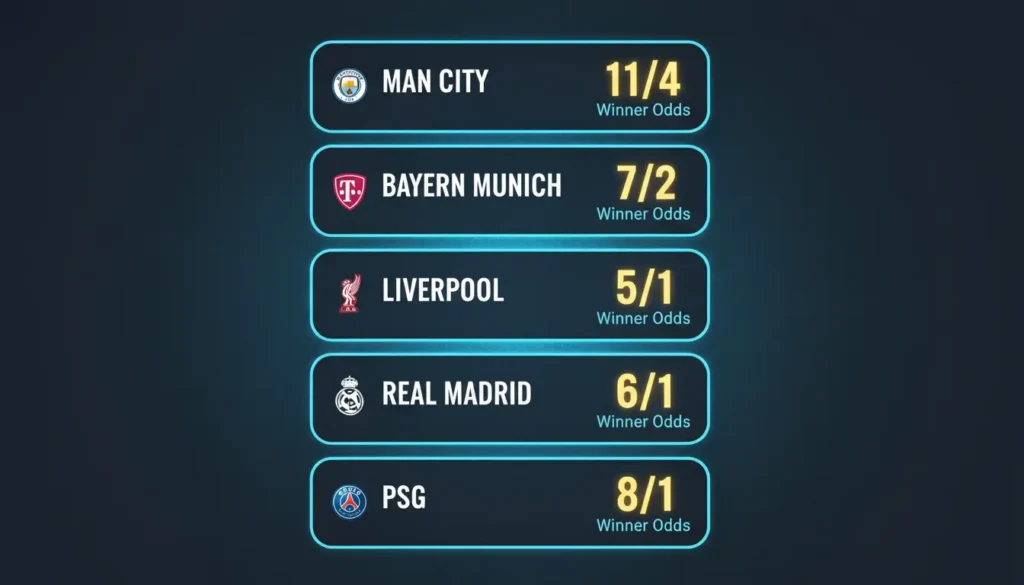
What’s fascinating about this year’s market is how it’s being shaped by the new format. The Swiss-style league phase means more games, more variance, and theoretically more chances for traditionally stronger teams to recover from early setbacks. Bookmakers haven’t fully adjusted their models for this yet. They’re still pricing as if we’re in the old group stage format where one bad night in a group of death could doom your entire campaign.
Take Barcelona at 8/1, for instance. That price would have been 5/1 two years ago. The market is spooked by their financial situation and inconsistent form, but they’re forgetting something crucial: this is still Barcelona. They’ve got a core of players who know how to win in Europe, and more importantly, they’ve got that Camp Nou mystique that turns ordinary Tuesday nights into something magical.
The Favorites: Separating Hype from Reality
Liverpool at 5/1 makes sense on paper. They’re flying high in the Premier League, they’ve strengthened in the summer, and they’ve got that Anfield factor. But dig deeper and questions emerge. Their new system under their latest tactical evolution is more open than before. Great for entertainment, potentially problematic against elite European counter-attacking teams.
The thing about Liverpool is they’re almost too good domestically. Sounds weird, right? But when you’re walking the Premier League, there’s a tendency to take your foot off the gas in Europe. Not deliberately, but subconsciously. The hunger isn’t quite the same when you’re already feasting elsewhere.
Real Madrid at 6/1 is the bet that makes me smile. Every single year, people write them off. Too old, too slow, lost their best players. And every single year, come April and May, there they are. It’s not luck, it’s not magic — although it sometimes feels like both. It’s institutional knowledge. Real Madrid knows how to win this competition in a way that transcends tactics and personnel.
Here’s a stat that should make you think: Real Madrid have won six Champions Leagues in the last eleven years. The current odds suggest they have about a 14% chance of winning. Does that feel right to you? Because it doesn’t to me. This is a club that treats the Champions League like their personal playground. They might struggle in La Liga, they might look vulnerable in January, but when those knockout rounds start? Different animal entirely.
PSG at 7/1 is where things get interesting. Last year’s winners, but the market isn’t convinced. Why? Because one swallow doesn’t make a summer, and one Champions League doesn’t erase years of European frustration. The question is whether they’ve finally figured out the formula or whether last year was the perfect storm.

The Value Picks: Where Smart Money Lives
Now we’re getting to the good stuff. Forget the favorites for a moment. The real value in outright betting often lives in the 12/1 to 25/1 range. These are teams good enough to win but priced like they’re not.
Atletico Madrid at 16/1 is criminal. Absolutely criminal. This is a team that knows how to grind out results in Europe. They might not play beautiful football, but since when did that matter in knockout competitions? Simeone has taken them to two finals before. Their style frustrates opponents, and frustrated opponents make mistakes.
Think about the path to victory. You don’t need to be the best team in Europe. You need to be the best team on seven specific nights. Atletico’s low block, counter-attacking style is built for exactly that. They’re the team nobody wants to draw, yet they’re priced like also-rans.
Inter Milan at 18/1 learned something from that final hammering. Italian teams have this habit of using painful defeats as fuel for future success. They’ve strengthened smartly, they’ve got Serie A wrapped up early, allowing them to focus on Europe, and they play a style that travels well.
Here’s what most punters miss about Italian teams in Europe: they’re incredibly difficult to beat over two legs. The aggregate scoreline might not be pretty, but they advance. And in a knockout competition, advancing is all that matters.
Bayer Leverkusen at 22/1 might be the bet of the tournament. Xabi Alonso has them playing some of the most tactically sophisticated football in Europe. They went unbeaten in the Bundesliga last season. Unbeaten! Yet they’re priced like a team that might scrape through to the quarters if they’re lucky.
The market doesn’t respect the Bundesliga right now, and that’s creating value everywhere. German teams not named Bayern Munich are being systematically underpriced, and Leverkusen is the prime example.

The Dark Horses: Chaos Theory in Action
At odds of 30/1 and above, we’re in lottery ticket territory. But here’s the thing about the Champions League — it’s the competition where Leicester City-type miracles actually happen. Porto won it in 2004 at similar odds. Liverpool’s comeback against AC Milan in 2005 was priced at 50/1 at halftime.
Sporting CP at 40/1 has a manager who knows how to organize a team. They’re tactically flexible, they’ve got pace on the counter, and most importantly, nobody takes them seriously. That’s a dangerous combination in knockout football.
Newcastle United at 35/1 brings something different: Premier League intensity combined with Champions League naivety. Sometimes not knowing you’re supposed to be scared is an advantage. They’ve got the financial backing, they’ve got a passionate crowd that can turn St. James’ Park into a cauldron, and they’ve got nothing to lose.
The beauty of these longer odds bets is you don’t need to stake much to make it interesting. A small bet at 35/1 or 40/1 keeps you emotionally invested throughout the tournament, and if chaos strikes — which it often does in the Champions League — you’re looking at a serious payday.
Timing Your Bet: The Art of the Entry Point
The single biggest mistake punters make with outright bets is thinking there’s one optimal time to bet. There isn’t. Different timing strategies work for different approaches.
Pre-season odds offer the most value on unfashionable teams. The market hasn’t adjusted to summer signings, managerial changes, or shifts in team dynamics. If you can identify a team that’s strengthened significantly, pre-season is your window.
Post-group stage is where smart money often enters the market. Now you’ve got actual Champions League performances to analyze. Teams that look vulnerable are often overpriced, while teams showing tactical adaptability are undervalued. The market overreacts to group stage results, creating opportunities.
In-play betting during knockout rounds is for the brave and the informed. The odds swing wildly based on individual moments. A red card, an early goal, a tactical substitution — each creates temporary value. But you need to be watching, you need to understand the game, and you need to act fast.
The Hedging Game: Protecting Your Position
Let’s say you’ve backed Inter Milan at 18/1 back in September, and now it’s March and they’re in the quarter-finals. Their odds are down to 6/1. You’ve got a decision to make.
The amateur move is to let it ride or cash out completely. The professional move is to hedge intelligently. You can lay them on an exchange, ensuring profit regardless of outcome. You can back other quarter-finalists to create a portfolio that profits from multiple outcomes. You can even use their opponents in each round to create guaranteed profit scenarios.
But here’s where it gets interesting. Sometimes the best hedge is no hedge at all. If you’ve bet amounts you’re comfortable losing, and the value is still there, letting it ride can be the optimal play. The key is making this decision based on value, not emotion.
Statistical Edges That Actually Matter
Forget the basic stats everyone looks at. Goals scored, goals conceded, possession percentage — the market already knows all that. What the market struggles to price in are the intangibles and the deeper patterns.
The Second Season Syndrome: Teams in their second consecutive season of Champions League football after a long absence tend to overperform. The first year is about learning, the second is about competing. Look at the odds on teams fitting this profile — they’re consistently undervalued.
The Domestic Sacrifice: Teams willing to sacrifice domestic success for European glory have a massive edge. It’s not just about squad rotation; it’s about psychological focus. When a team’s entire season is defined by Champions League success, they find another level in crucial moments.
The Manager Factor: Certain managers are simply worth an extra 10-20% chance of winning. Not because they’re tactical geniuses, but because they understand the rhythm of the competition. They know when to press, when to sit back, when to rotate, when to go all-in.
Here’s a pattern nobody talks about: teams that lose domestic cup finals often go on Champions League runs. The disappointment creates hunger, the experience of a final helps with pressure, and the need to salvage the season provides motivation. Look for teams that lost domestic finals last season — their outright odds often offer value.
Reading the Betting Market Movements
The movement of odds tells you more than the odds themselves. When Liverpool shortens from 6/1 to 5/1, ask yourself why. Is it informed money? Public money? Reaction to team news?
Early season movements are usually public money following narratives. Mid-season movements often reflect genuine changes in probability. Late season movements can be either smart money positioning or public panic.
Watch for the quiet movers. When a team’s odds shorten without any obvious reason — no big wins, no major signings, no media hype — that’s often smart money positioning itself. These quiet moves are worth following.
Conversely, when odds drift despite good results, ask why. The market might know something you don’t. Injury concerns, dressing room unrest, fixture congestion — these factors sometimes show up in the odds before they become public knowledge.
The Portfolio Approach
Here’s how I actually bet the Champions League winner market, and it’s probably different from what you expect. I don’t pick one team. I build a portfolio.
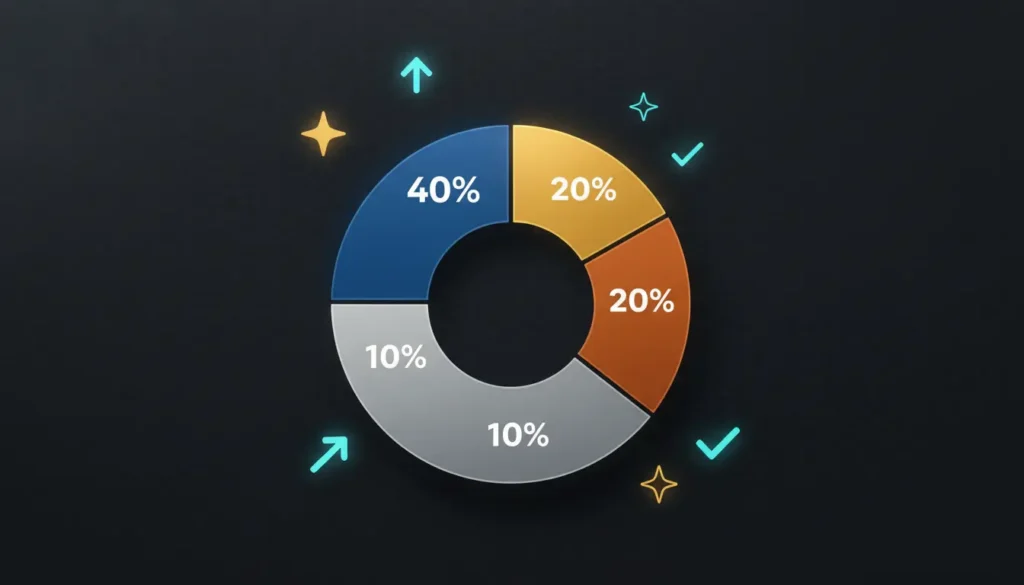
Start with your banker — the team you genuinely believe has the best chance relative to their odds. This gets 40% of your total stake. For me this year, that’s Real Madrid at 6/1. Boring? Maybe. Profitable? Often.
Next, identify two value plays in the 12/1 to 20/1 range. These each get 20% of your stake. I’m looking at Atletico Madrid and Inter Milan here. They might not win, but their odds are wrong.
Finally, two chaos bets at 30/1 or above. 10% each. Small stakes, big potential. Newcastle and Sporting CP for me. Will they win? Probably not. But at those odds, they don’t need to win often to be profitable long-term.
This approach means you’re not relying on one outcome. You’ve got multiple paths to profit, and even if your banker fails, your value plays can save your position.
The Psychology of Outright Betting
This is the part most guides skip, but it’s crucial. Betting on the Champions League winner is a nine-month emotional rollercoaster. Your team loses 3-0 away in the first leg? Your bet feels dead. They overturn it at home? You’re calculating your winnings.
The key is to remember that the bet isn’t actually decided until May. Every twist, every turn, every controversial VAR decision — they’re all just part of the journey. The teams that look dead in November might be flying by March.
Don’t check the odds daily. It’ll drive you insane. Don’t cash out after one bad result. Don’t double down after one good result. Treat it like what it is — a long-term position that will have ups and downs.
Key takeaways for outright winner bets and timing

The Champions League winner market is simultaneously the hardest and easiest market to beat. Hard because you’re predicting something inherently unpredictable. Easy because the bookmakers struggle just as much as you do, creating inefficiencies everywhere.
The teams at 5/1 to 8/1 will win it most years. But most years isn’t every year, and those exceptional years are where the real money is made. A balanced approach — some safe value, some calculated risks — gives you the best of both worlds.
Remember, you’re not trying to predict the future with certainty. You’re trying to find spots where the odds are wrong. And in a competition as beautiful and chaotic as the Champions League, the odds are wrong more often than you’d think.
The trophy will be lifted in Budapest on May 30, 2026. Who’ll lift it? I don’t know. But I do know that right now, in October 2025, there’s value all over this market. You just need to know where to look, when to strike, and most importantly, when to hold your nerve.
Because in the Champions League, fortune really does favor the brave. Just make sure your bravery is backed by value, not hope.
After studying the outright winner odds for the 2025-26 Champions League and understanding how the market prices the main title contenders, readers can return to championsleagueoddsbet to continue exploring other long-term and team-specific UCL markets.
If someone wants to deepen that outright perspective with a focused guide on tournament winner betting and futures logic, the best continuation is UCL outright betting.