Champions League Betting External Factors Odds
 Available in US
Most betting analysis focuses on what happens between the white lines – formations, player quality, recent form, head-to-head records. Yet football matches occur within physical environments that influence outcomes in measurable ways. Rain transforms playing surfaces and ball behavior. Wind disrupts crossing and long-ball strategies. Temperature extremes affect player stamina and execution. The Champions League’s continental scope ensures that some fixtures occur in conditions dramatically different from others, creating analytical opportunities for bettors willing to incorporate environmental factors.
External variables extend beyond weather to include fixture congestion, travel demands, crowd dynamics, and situational motivation. A club playing their third match in seven days against a rested opponent faces physical disadvantages that pure quality analysis misses. Teams traveling significant distances – particularly those crossing multiple time zones – experience fatigue that compounds across demanding knockout schedules. Understanding these factors helps refine probability assessments beyond what headline statistics reveal.
The Champions League’s scheduling across September through May means weather conditions vary dramatically by phase. Early league phase matches often occur in mild autumn conditions; later knockout rounds face winter extremes in northern venues. This seasonal variation creates predictable patterns that bettors can incorporate into their analytical frameworks.
Table of Contents
Weather Effects on Match Outcomes
Rain affects football through multiple mechanisms. Wet surfaces change ball behavior, making passes skid faster while reducing reliable control. Slippery pitches increase injury risk and player caution, sometimes suppressing aggressive play. Goalkeepers face greater challenge with wet balls, potentially increasing shot conversion rates. However, elite Champions League venues typically feature excellent drainage, limiting the extreme waterlogging that might affect lower-level fixtures.
Research suggests rain has modest but measurable effects on scoring. Wet conditions reduce passing accuracy and increase technical errors, which can paradoxically favor both attacking (more mistakes leading to turnovers in dangerous areas) and defensive (reduced ability to construct chances) outcomes depending on team styles. Possession-oriented teams relying on short passing combinations may struggle more than direct teams comfortable with physical contests and aerial duels.

Wind creates the most consistent weather impact on football outcomes. Strong winds disrupt crossing accuracy, long ball trajectories, and goalkeeper distribution. Teams that rely on width and delivery into the box face particular challenges when wind unpredictably alters ball flight. Tactical adjustments – keeping the ball on the ground, playing with the wind rather than against it – become essential. Matches played in gusty conditions often see reduced scoring as both teams struggle with basic execution.
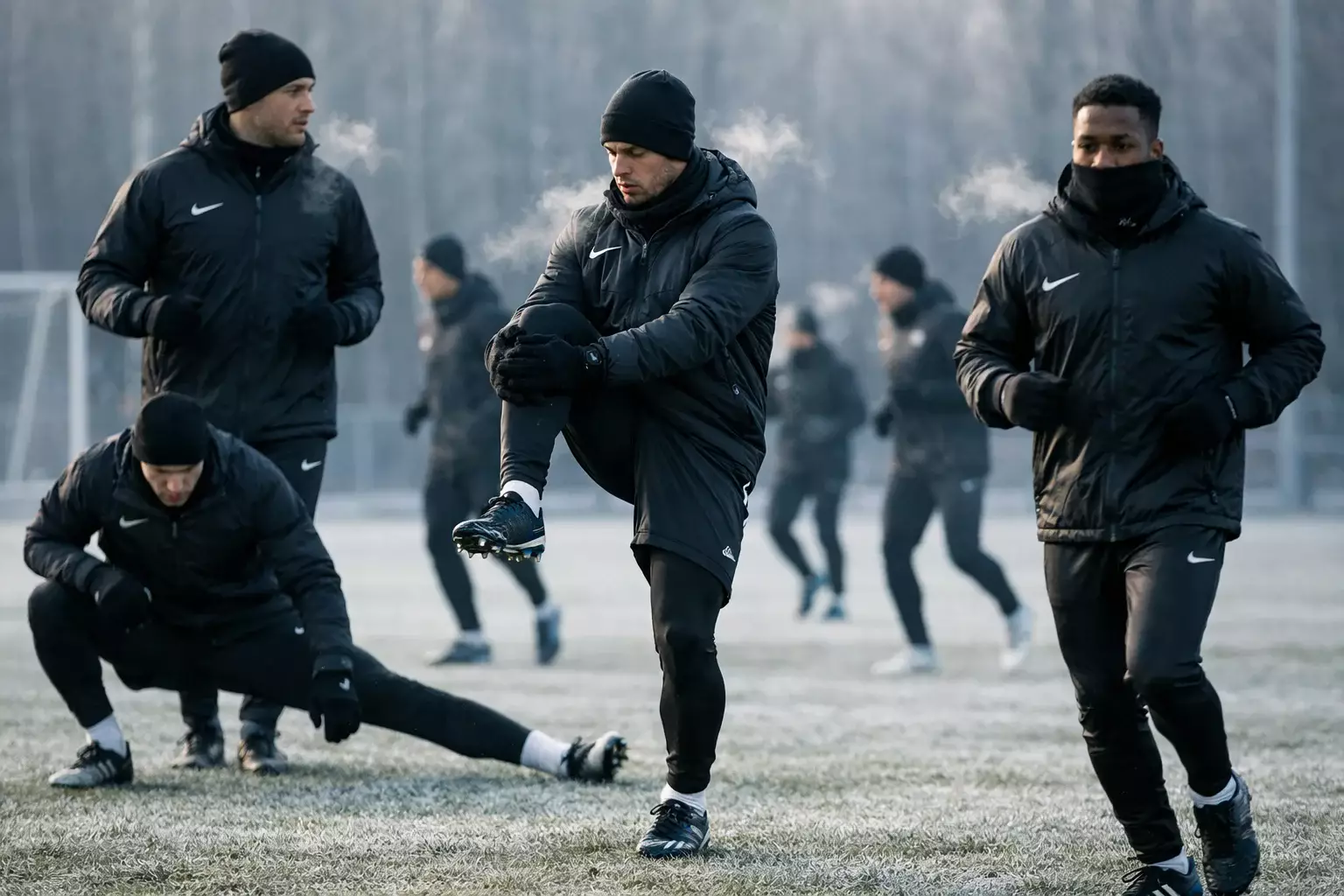
Temperature extremes affect player physiology and performance capacity. Cold conditions cause muscle stiffness, reduced flexibility, and potentially increased injury risk. Players must warm up more thoroughly and maintain activity to prevent cooling. Hot conditions create dehydration and fatigue concerns, particularly for clubs unaccustomed to heat. Research indicates high temperatures reduce players’ high-intensity running distance, which can affect pressing intensity and defensive recovery.
Champions League Weather Patterns
The tournament’s geography creates predictable weather variation. Scandinavian venues (if Norwegian or Swedish clubs qualify) experience early-season twilight and late-season cold. Eastern European fixtures in Ukraine, Russia’s former participants, or Turkish clubs face continental climate extremes. English fixtures contend with persistent rain; Spanish matches rarely do. Understanding these patterns helps anticipate conditions without match-specific forecasting.
Night matches – the Champions League’s standard scheduling – often experience different conditions than afternoon fixtures. Temperature drops after sunset can catch teams unprepared; dew formation on pitches creates slippery surfaces in the second half. These effects are subtle but can influence late-game execution when fatigue already compromises performance.
Altitude becomes relevant when clubs from elevated cities participate. Venues in Switzerland, Austria, or certain Spanish locations present modest altitude effects that sea-level teams might notice. While not as dramatic as South American altitude challenges, even moderate elevation affects ball flight, player respiration, and overall performance. Teams from lower altitudes sometimes struggle in early fixtures before physiological adaptation occurs.
Indoor stadiums eliminate weather concerns entirely. Clubs playing in retractable or fixed-roof venues – common among newer constructions – face no weather variability regardless of external conditions. This consistency can actually create disadvantage when these clubs travel to exposed venues with challenging conditions they rarely experience at home.
Fixture Congestion and Fatigue
The Champions League’s scheduling within already-crowded domestic calendars creates significant fixture congestion for participating clubs. Elite clubs might play Saturday league matches, Tuesday Champions League fixtures, and the following weekend again – three high-intensity matches in seven or eight days. This compressed schedule produces cumulative fatigue that affects performance, particularly in the second match of congested periods.
Research demonstrates that teams playing with fewer recovery days underperform those with more rest. This effect is most pronounced when comparing clubs with different rest advantages – if one team had a full week’s preparation while their opponent played three days prior, the rested team holds meaningful advantage independent of quality differences. Monitoring fixture schedules helps identify these asymmetric rest situations.
Knockout rounds intensify congestion effects because elimination ties demand maximum effort. Teams cannot rotate extensively when advancing matters most, meaning key players accumulate minutes across crucial periods. By the quarter-finals and semi-finals, some clubs may have played twelve or more high-stakes matches in the calendar year, with cumulative fatigue affecting spring performance.
Squad depth mitigates congestion effects. Clubs with quality rotation options can manage workloads without sacrificing performance; those relying on thin squads or irreplaceable individuals face compounding fatigue. Analyzing squad depth alongside fixture schedules helps predict which clubs might struggle as seasons progress.
Travel and Time Zone Considerations
Champions League competition requires continental travel that creates fatigue beyond simple distance. A flight from London to Moscow spans four time zones and requires late-night returns after evening fixtures. Clubs based in western Europe traveling to eastern fixtures, or vice versa, face jet lag effects that pure distance metrics understate.
Research on athletic performance across time zones suggests that eastward travel is more disruptive than westward travel, and that each time zone crossed requires approximately one day of adaptation for full recovery. A club traveling three time zones east for a Tuesday fixture likely hasn’t fully adapted, potentially affecting performance margins.
Away fixture scheduling creates specific challenges. Teams typically travel the day before matches, limiting training time and disrupting routines. Return travel after evening fixtures means late-night departures and early-morning arrivals. The cumulative effect of repeated European away trips across a season can affect domestic performance, creating analytical opportunities in both Champions League and league betting.
Some clubs manage travel better than others through institutional experience and resource investment. Chartered flights, specialized recovery protocols, and experienced medical staffs mitigate travel effects. First-time Champions League participants often struggle with travel demands that established clubs navigate routinely.
Situational and Motivational Factors
Match importance varies across the Champions League season in ways that affect performance. League phase matches where qualification is already secured or mathematically impossible may see rotation and reduced intensity. Knockout matches that determine advancement versus elimination demand maximum effort from both clubs. Understanding situational stakes helps predict effort levels that can influence outcomes.
Aggregate positions in knockout rounds create specific motivational dynamics. Teams trailing on aggregate must attack, often beyond their tactical comfort zones. Teams protecting leads may sit deeper than usual, inviting pressure they would normally avoid. These situational adjustments influence expected goals, shots, and ultimately match outcomes.
Historical rivalry or recent controversy between clubs can elevate match intensity beyond typical levels. When teams meet with recent grievances – controversial eliminations, disputed refereeing, or off-pitch conflicts – players often compete with elevated aggression that affects card accumulation, fouls, and overall match character.
Managerial pressure and job security introduce variable motivational effects. Managers under threat may gamble tactically in ways that increase variance; those recently appointed may be implementing new systems that require adjustment periods. Tracking managerial situations helps anticipate non-quality-based performance variation.
Practical Integration
Accessing weather forecasts for specific match times and venues enables informed analysis. Weather services provide predictions with reasonable accuracy 24-48 hours in advance. Checking forecasts the day before and morning of matches allows integration into betting decisions before odds fully reflect conditions.
Fixture schedule tracking requires systematic attention to both Champions League and domestic calendars. Note when clubs face congestion, identify asymmetric rest advantages, and track accumulating fatigue across demanding periods. This information is publicly available but requires consistent monitoring.
Weight external factors proportionally to their actual impact. Weather effects are real but modest compared to quality differences between clubs; a rainy pitch does not transform underdogs into favorites. External factors work at the margins, influencing outcomes by a few percentage points rather than determining results outright. Incorporate them as adjustments to quality-based assessments rather than primary analytical drivers.
Track your external-factor-adjusted predictions against outcomes to evaluate whether this analysis adds value. If systematically incorporating weather, travel, and congestion improves your prediction accuracy, continue refining these methods. If results show no improvement, the analytical effort may not justify the returns.
Limitations and Caveats
Bookmaker models increasingly incorporate external factors that naive analysis treats as overlooked. Professional odds compilers access weather forecasts, fixture schedules, and travel information just as bettors do. The edge from external factor analysis is likely smaller than it once was, though inefficiencies may persist in specific markets or circumstances.
Some external factors are unpredictable. Injuries during matches, unexpected weather changes, or last-minute lineup alterations cannot be incorporated into pre-match analysis. Accept that even well-researched external factor analysis faces irreducible uncertainty from events that unfold after bets are placed.
The psychological dimension of external factors resists quantification. How much does playing in driving rain really affect a specific team’s mentality? Does travel fatigue hit some clubs harder than others based on squad age or conditioning? These questions have answers, but they are not precisely measurable.
Correlation between external factors complicates analysis. Rainy conditions often accompany wind; fixture congestion correlates with late-season fatigue; travel demands concentrate among clubs advancing deep in competition. Isolating individual factor effects requires careful analytical design that casual observation cannot achieve.
After analysing how external conditions such as weather, scheduling pressure, and travel context can affect Champions League betting decisions, readers can return to championsleagueoddsbet to continue refining their contextual reading of UCL matches.
If someone wants to extend this environmental perspective into one of the most powerful venue-related contextual factors in European football, the best next article is venue effects.