Champions League Correct Score Betting Odds
 Available in US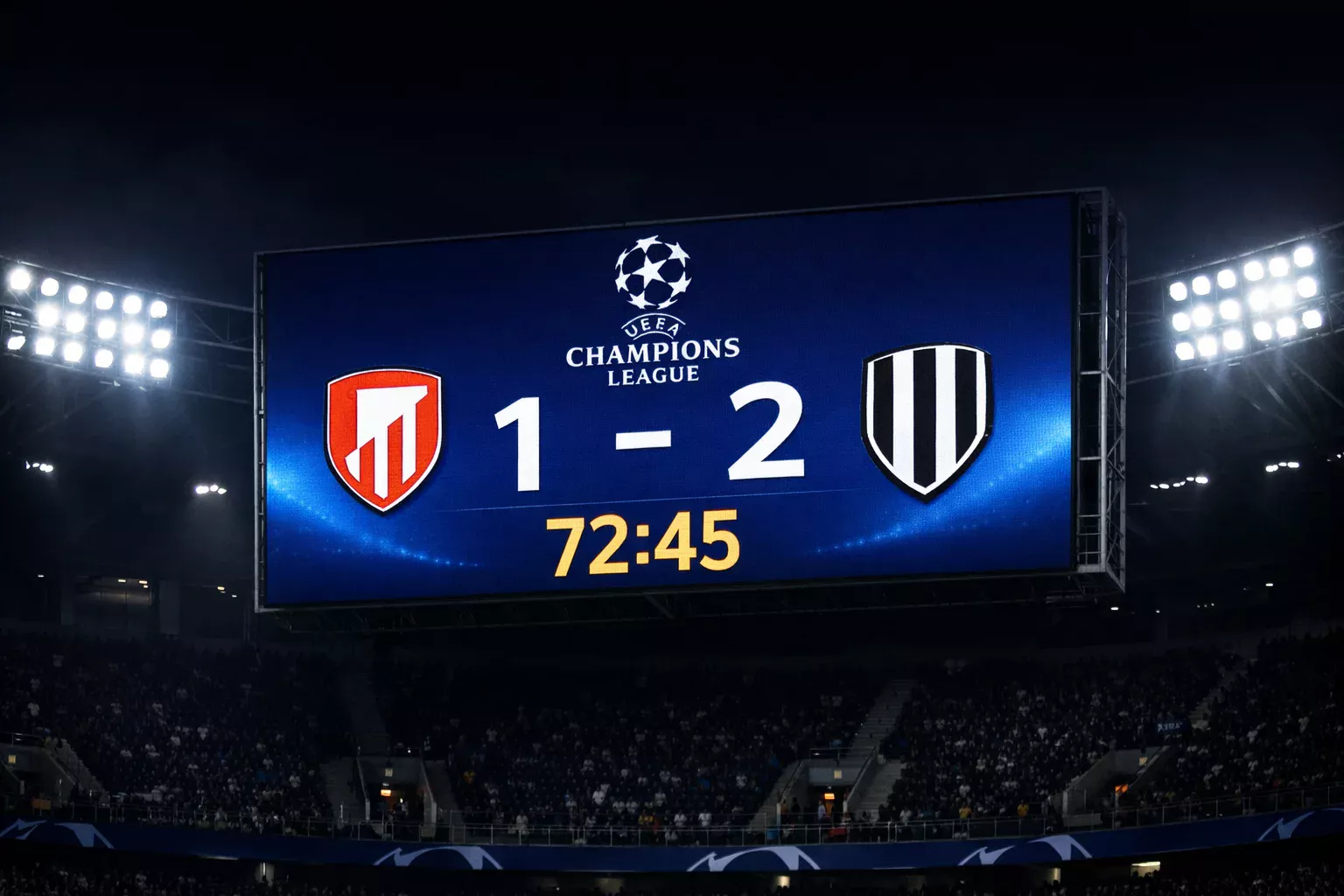
Predicting the exact final score of a football match sits among the most difficult tasks in sports betting. You are not merely forecasting who wins or whether goals occur – you are specifying precisely how many goals each team scores, in a sport where a single deflected shot, goalkeeper error, or controversial penalty decision can swing outcomes dramatically. Yet the difficulty brings commensurate reward. Correct score odds routinely exceed 5.00, with less common scorelines offering 15.00, 30.00, or higher. For bettors willing to accept low strike rates in exchange for substantial payoffs, the Champions League correct score market presents genuine opportunities.
The mathematics work against you from the start. Even the most common scoreline in football – typically 1-1 or 1-0 depending on the competition – occurs in roughly 9-12% of matches. Backing a single correct score at odds of 8.00 implies the bookmaker believes it has approximately 12.5% probability, meaning you need better than one win in eight attempts just to break even. Most bettors cannot consistently achieve this, which is precisely why bookmakers profit handsomely from correct score markets despite offering headline-grabbing odds. Understanding these dynamics is essential before committing significant bankroll to this market.
The Champions League’s unique competitive structure creates both advantages and complications for correct score bettors. The talent concentration at the top produces predictable attacking dominance in certain matchups, but the tactical sophistication of elite managers makes precise scoreline prediction exceptionally difficult. A side expected to cruise might rotate heavily; an underdog might absorb pressure brilliantly before conceding late. The market rewards those who can identify specific game scripts with reasonable accuracy while managing the inherent volatility.
Table of Contents
The Scoreline Distribution Reality
The 2024/25 Champions League league phase saw 1-0 emerge as the most common scoreline, consistent with historical patterns across elite European football. Combined with 2-1 and 1-1, these three results account for approximately 25-30% of all Champions League matches. For correct score bettors, these frequencies matter enormously – not because backing 1-0 at 7.00 represents automatic value, but because understanding scoreline distributions helps identify when bookmakers have mispriced specific outcomes.
Low-scoring scorelines (1-0, 0-0, 2-1, 1-1) dominate the frequency charts because most matches feature cautious opening periods, tactical adjustments after goals, and game management in closing stages. Even when a match feels open and chaotic, the constraints of ninety minutes and the rarity of genuine goal-scoring opportunities (most teams average 10-15 shots per match with conversion rates around 10-15%) limit scoreline variance more than casual observers expect.

High-scoring results like 4-2, 5-1, or Bayern Munich’s remarkable 9-2 victory over Dinamo Zagreb grab headlines but occur rarely enough that backing them routinely destroys bankrolls. When they do occur, they typically feature specific circumstances: massive talent gaps, early red cards, or desperate attacking from trailing teams. Recognizing these preconditions allows targeted selection of high-scoring outcomes rather than hopeful speculation.
The distinction between home and away scorelines matters considerably. Home teams win more frequently and score more goals on average, making results like 2-0 or 2-1 to the home side more common than their away equivalents. When pricing correct score selections, verify whether you are backing a home or away scoreline – the same numerical result carries different probabilities depending on venue.
Strategic Approaches to Correct Score Selection
Rather than backing single scorelines, many successful bettors use dutching strategies to cover multiple outcomes. If you believe a match will finish with exactly two goals and a home win, backing both 2-0 and 1-1 spreads risk across related outcomes. The combined stake produces lower individual odds, but the probability of winning increases proportionally. Sophisticated dutching calculates stakes to produce equal returns regardless of which covered selection wins, though this requires careful mathematical calculation or betting tools.
Focusing correct score betting on specific match circumstances improves hit rates substantially. Knockout first legs between evenly matched elite clubs frequently produce 1-0, 0-0, or 1-1 results as teams prioritize defensive solidity. Second legs where aggregate scores are level often see decisive single-goal margins. Late-season matches where qualification is already secured for both teams can produce unusual scorelines as managers experiment with lineups. Identifying these situational patterns and concentrating correct score betting on matches fitting your identified profile creates edge.
The live betting market transforms correct score wagering by allowing updated selections as matches progress. A 0-0 scoreline at halftime in a defensively tight encounter might offer 0-0 at enhanced odds compared to pre-match, representing value if your analysis suggested a low-scoring affair. Alternatively, a 1-0 lead for a dominant side might make 2-0 or 3-0 attractive selections for the final thirty minutes. In-play correct score betting requires quick decision-making and comfortable familiarity with evolving odds, but rewards those who can process match flow and probability adjustments simultaneously.
Expected goals models provide rigorous foundations for correct score betting when used thoughtfully. If pre-match xG projections suggest 1.3 expected goals for the home team and 0.8 for the away side, the most probable scorelines cluster around 1-0 and 1-1, with 2-0 and 2-1 as secondary possibilities. Comparing these model-derived probabilities against bookmaker odds reveals potential value. The limitation is that xG models capture average expectations rather than the variance that actually determines specific outcomes – a match with 1.5 xG can easily finish 0-0 or 4-1 depending on finishing accuracy and chance clustering.
Managing the Inevitable Losing Streaks
Correct score betting produces prolonged losing streaks as a mathematical certainty. Even highly skilled bettors hitting 15% of their selections – an excellent strike rate – will experience runs of ten or more consecutive losses regularly. The psychological and bankroll management challenges of enduring these droughts distinguish successful correct score bettors from those who abandon the market after early frustration.
Stake sizing must account for the extreme variance. While typical betting advice suggests 1-3% of bankroll per bet, correct score wagers at long odds justify even smaller stakes – perhaps 0.5% or less – to survive inevitable losing sequences. The temptation to increase stakes after near-misses (your selection lost 2-1 when you backed 1-1) or to chase losses must be resisted fiercely. Consistent small stakes, applied systematically over hundreds of selections, allow the market’s high payoffs to compound when winners eventually arrive.

Tracking results meticulously reveals whether your approach generates positive expected value despite short-term variance. Record not just wins and losses but your selections’ implied probabilities versus actual outcomes. If you consistently back scorelines at odds implying 10% probability and they hit 12% of the time, you have demonstrable edge regardless of recent results. This data-driven confidence sustains discipline during inevitable losing periods.
Some bettors limit correct score wagering to specific situations where they have demonstrated historical success. Perhaps you excel at predicting knockout first-leg scorelines but struggle with league phase goal-fests. Concentrating activity on your proven strengths while avoiding markets where your strike rate lags improves overall profitability even if it means passing on matches that seem attractive.
Bookmaker Margins and Market Efficiency
Correct score markets carry significantly higher bookmaker margins than simpler markets like match result or over/under. The proliferation of possible outcomes – often twenty or more scoreline options plus “any other” catch-all selections – allows bookmakers to embed substantial overround across the market. Combined margins often exceed 20-30%, meaning correct score bettors face steeper mathematical headwinds than those focusing on more liquid markets.
This margin reality does not preclude profitable betting but does require compensating edge. You cannot succeed in correct score markets while hitting selections at rates close to implied probability – the margin ensures long-term losses in that scenario. Your analysis must identify systematically mispriced scorelines, either through superior match modeling, situational expertise, or recognition of public biases that bookmakers accommodate in their pricing.
Line shopping proves even more valuable for correct score than simpler markets because price variation increases with outcome complexity. One bookmaker might offer 1-0 at 7.50 while another has 6.50 for the identical selection – a substantial difference given the long odds involved. Maintaining accounts across multiple operators and checking prices before every correct score bet maximizes value capture.
Certain bookmakers offer correct score doubles or accumulators, combining scoreline selections from multiple matches. While these markets offer astronomical potential returns, the mathematical reality is brutal – combining two correct score selections at 8.00 each produces combined odds around 64.00, requiring both predictions to succeed. The margin compounds multiplicatively across legs, making such bets extremely negative expected value for most recreational bettors.
Practical Implementation and Discipline
Begin correct score betting with paper trading or minimal stakes to verify your approach generates positive results before committing meaningful bankroll. Track at least one hundred selections before drawing conclusions – smaller samples produce misleading results given the inherent variance. If your strike rate significantly exceeds implied probabilities across this sample, you have evidence supporting continued wagering; if not, either refine your approach or acknowledge the market may not suit your analytical strengths.
Focus correct score selections on matches you have genuinely analyzed rather than attempting broad coverage. The temptation to back scorelines across every Champions League match of the week dilutes attention and typically produces random rather than informed selections. Better to make four carefully considered correct score bets per matchweek than twenty speculative guesses based on team names and gut feelings.
Combine correct score betting with other markets as hedging or enhancement strategies. If you strongly favor a 1-0 home win, supplementary bets on under 1.5 goals or home clean sheet provide partial returns even if the exact scoreline misses. Conversely, backing 2-1 might pair with both teams to score for correlation benefit. These combinations reduce variance while maintaining exposure to your core analysis.
The Champions League correct score market will never offer easy profits. The combination of unpredictable variance, high bookmaker margins, and the fundamental difficulty of predicting precise outcomes ensures that most participants lose money over time. Yet for disciplined bettors who develop genuine analytical edge, manage bankroll conservatively, and maintain psychological equilibrium through losing streaks, the market offers payoffs unavailable in more efficient betting markets. Success requires treating correct score as a long-term statistical exercise rather than a get-rich-quick opportunity – those who approach it with appropriate expectations and methodology can extract value from one of football betting’s most challenging yet rewarding markets.
After reviewing the correct score market in Champions League betting and understanding why precision-based pricing creates both danger and upside, readers can return to championsleagueoddsbet to continue comparing high-variance and lower-variance markets.
If someone wants to connect this exact-score perspective with a more structured partial-result market, the best page to continue with is double result strategies.